


|
Have questions?
Contact us
Already a member? Sign in
|
Get every literary device explanation for Love's Labor's LostPlus so much more...
Sign up for LitCharts A+Get instant access to every literary device explanation, plus so much more...
Satire
Explanation and Analysis—The Nine Worthies:
In this scene, Nathaniel, Holofernes, Mote, Armado, and Costard put on their pageant of the Nine Worthies. The pageant depicts nine great men throughout history, and each man plays several roles. However, each man falls comically short of his assigned parts. Nathaniel’s performance as Alexander the Great satirizes certain ideals of masculinity:
NATHANIEL
When I lived, I was the world's
commander.
By east, west, north, and south, I spread my
conquering might.
My scutcheon plain declares I am Alisander—BOYET
Your nose says no, you are not, for it stands too right.BEROWNE, to Boyet
Your nose smells "no" in <this>, most tender-smelling knight.PRINCESS
The conqueror is dismayed.—Proceed, good Alexander.
Nathaniel introduces himself as the “world’s commander,” a military leader who dominates all corners of the earth. Boyet immediately begins heckling him, pointing out that his nose is too straight to be Alexander’s. Berowne picks up the heckling and adds that Nathaniel smells too bad to be Alexander (in reference to Plutarch’s description of Alexander as “sweet-smelling”). Nathaniel falters and becomes embarrassed, leading the princess to note his discomfort and encourage him.
Many of the men in the play attempt to exude stereotypically masculine qualities of self-control, strength, and power. The men they choose to lionize in their pageant are a reflection of these values (hence the incorporation of Alexander, Julius Caesar, King Arthur, etc.). Nathaniel, however, appears timid and easily thrown off in his role as Alexander. His friends’ (hopefully) good-natured heckling drives him to distraction and eventually leads to him wander offstage. Appearances sit in clear and intentional tension with reality, and normal men are unable to live up to the larger than life construction of masculinity captured in the image of Alexander.
The sharp contrast between the reality of who Nathaniel is, and the figure he is meant to represent, pokes fun at the ideals behind the pageant. The satire continues through the scene as the men stumble through their lines, and even sabotage one another (as when Costard announces that Jacquenetta is pregnant with Armado’s child). The silliness of these ideals is reflected in how impossible they are for the men to perform.
Monthly
Annual (Best Value)

$595USD/mo
Charged $71.40 USD every year





 Teacher
$795USD/mo
Charged $95.40 USD every year




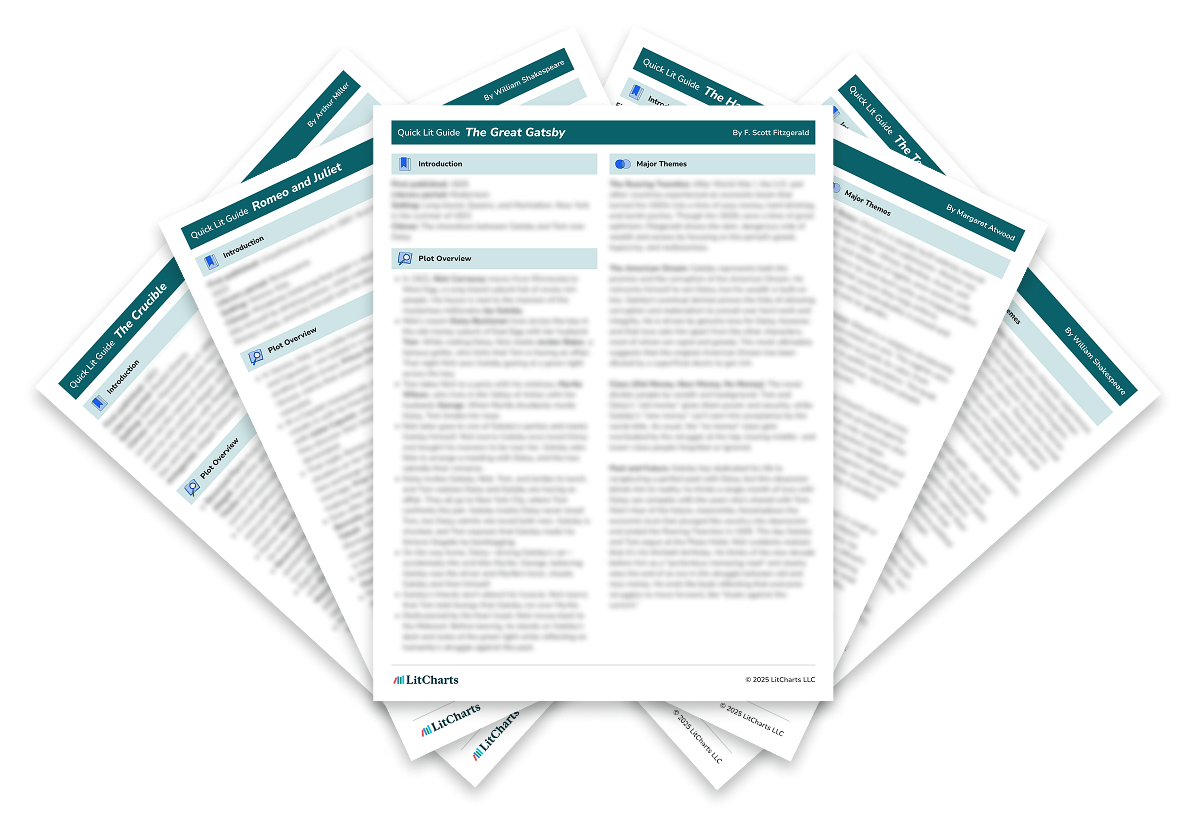
Literature Guide PDFs
LitCharts PDFs for every book you'll read this year.
Instant PDF downloads of all 2238 LitCharts literature guides and of every new one we publish. Try a free sample literature guide.
"Would not have made it through AP Literature without the printable PDFs. They're like having in-class notes for every discussion!"




Quotes Explanations
Find the perfect quote. Understand it perfectly. Then rock the citation, too.
For all 49,919 quotes we cover.
For all 49,919 quotes we cover.



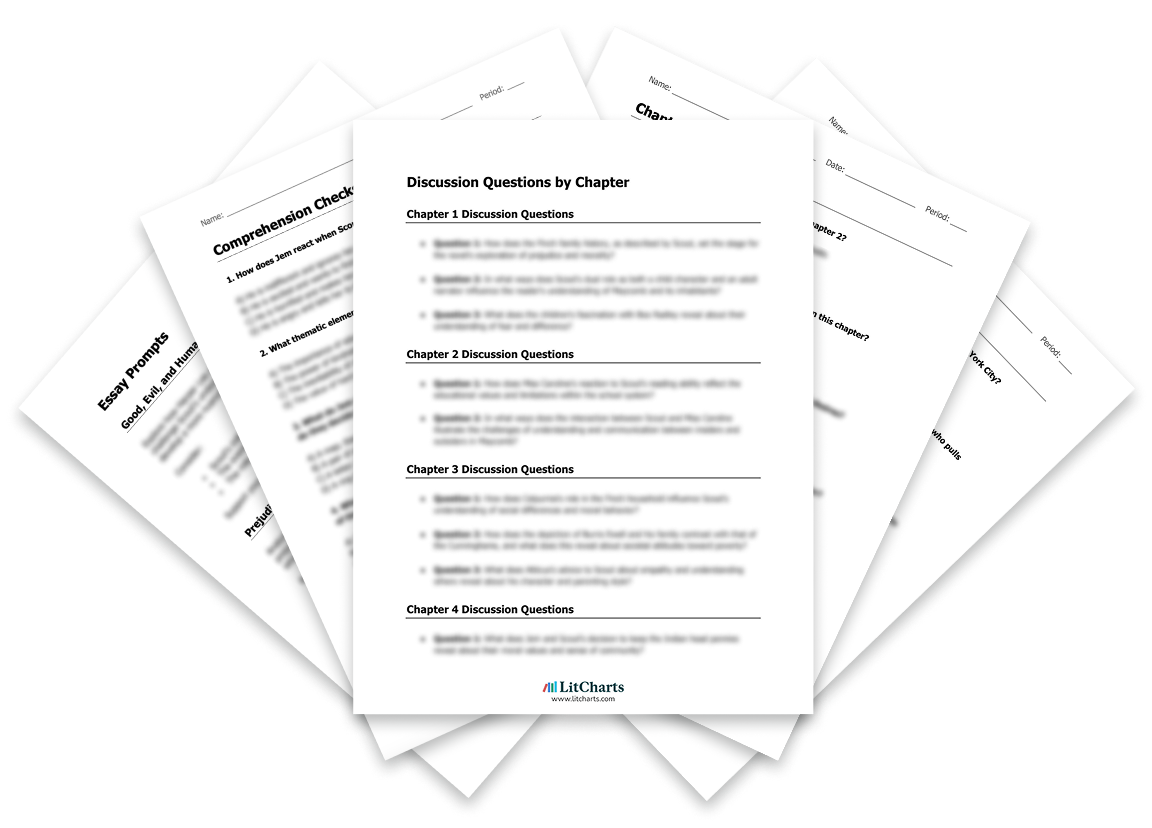
Teacher Editions
Close reading made easy for students.
Time saved for teachers.
For every book we cover.
Time saved for teachers.
For every book we cover.


Common Core-aligned


PDFs of modern translations of every one of Shakespeare's 37 plays, 154 sonnets, and 3 longer poems.

Literary Terms and Devices
Definitions and examples for every literary term and device you need to know.
Plus a quick-reference PDF with concise definitions of all 136 terms in one place.
Plus a quick-reference PDF with concise definitions of all 136 terms in one place.


Try a free sample literary term PDF.


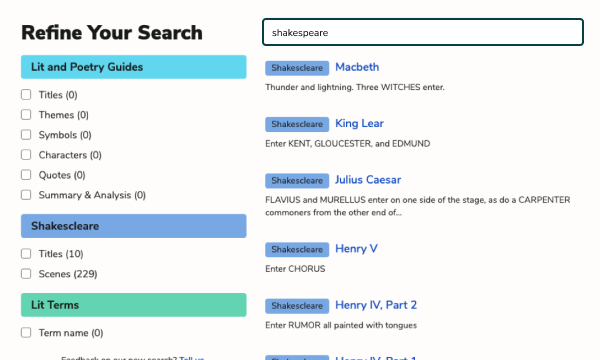
Advanced Search
Refine any search. Find related themes, quotes, symbols, characters, and more.


Related Themes
Comparing and contrasting texts? Find where any theme occurs across all of LitCharts in seconds.



Poetry Guides
Line-by-line explanations and analysis of figurative language and poetic devices.
For every lyric poem we cover.
For every lyric poem we cover.
