
|
Have questions?
Contact us
Already a member? Sign in
|
Get every literary device explanation for Burmese Days
Plus so much more...
Sign up for LitCharts A+
Get instant access to every literary device explanation, plus so much more...
Simile
Explanation and Analysis—Dog-like:
In Chapter 2, Mrs. Lackersteen bemoans the "laziness" of "servants" in the modern age, reminiscing about simpler times when it was appropriate to pay one's butler "only twelve rupees a month." She resents the newfound audacity she senses in those she believes—in her racist worldview—are inferior to her. In her frustration, Mrs. Lackersteen uses a simile to characterize her former butler, using him as an exemplar of how things used to be:
"I remember when we paid our butler only twelve rupees a month, and really that man loved us like a dog. And now they are demanding forty and fifty rupees, and I find that the only way I can even KEEP a servant is to pay their wages several months in arrears."
Mrs. Lackersteen asserts that her Burmese butler "loved" her and her family "like a dog": with unswerving, ignorant, pandering loyalty. This simile is not only racist but reminiscent of the rhetoric used by White Americans who enslaved Black people. To appease what semblance of a conscience they had left, these White Americans would claim that the people they enslaved were happier in chains—delighted to serve their "masters" with unswerving loyalty. This was, of course, a myth. Enslaved people did everything they could to survive in an unthinkably cruel system of oppression. Mrs. Lackersteen's butler likely did the same, doing everything he could to get into her good graces as a way to protect himself. What Mrs. Lackersteen perceives as audacity is, in reality, an oppressed class growing tired of the boot on its neck.
Monthly
Annual (Best Value)

$595USD/mo
Charged $71.40 USD every year
 Teacher
$795USD/mo
Charged $95.40 USD every year
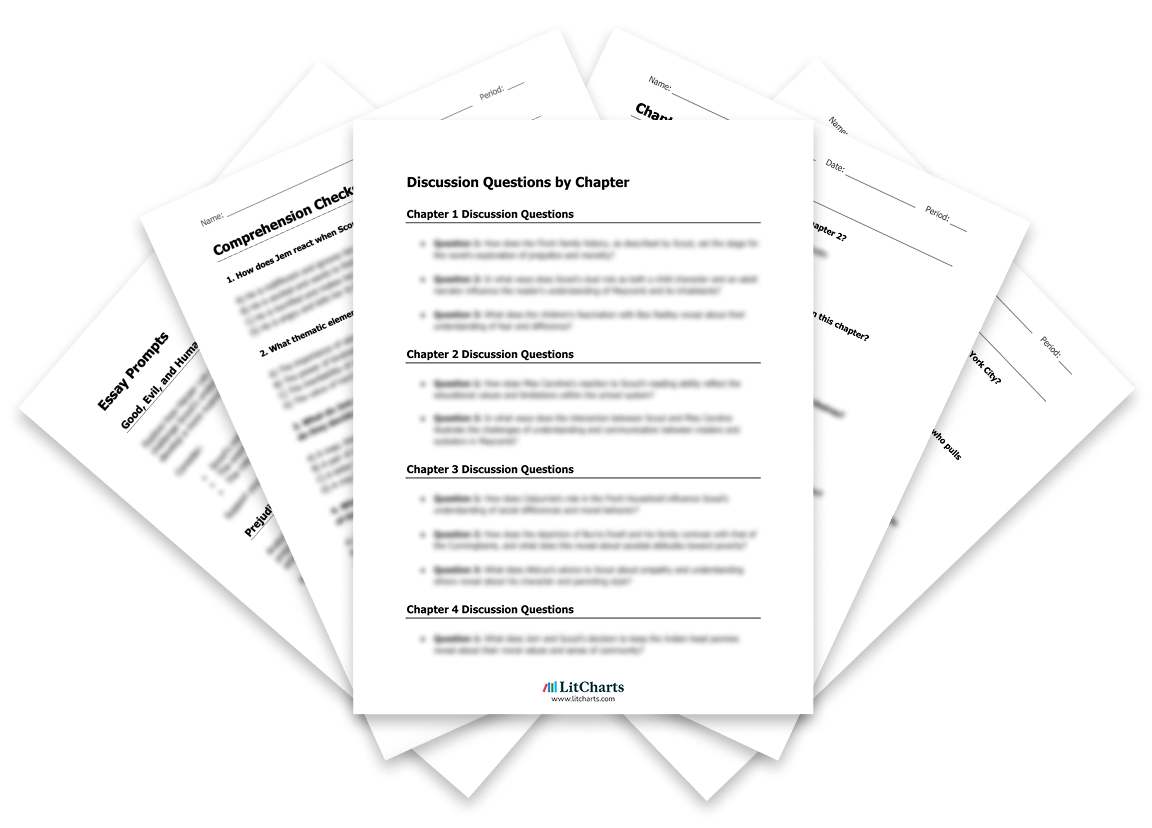


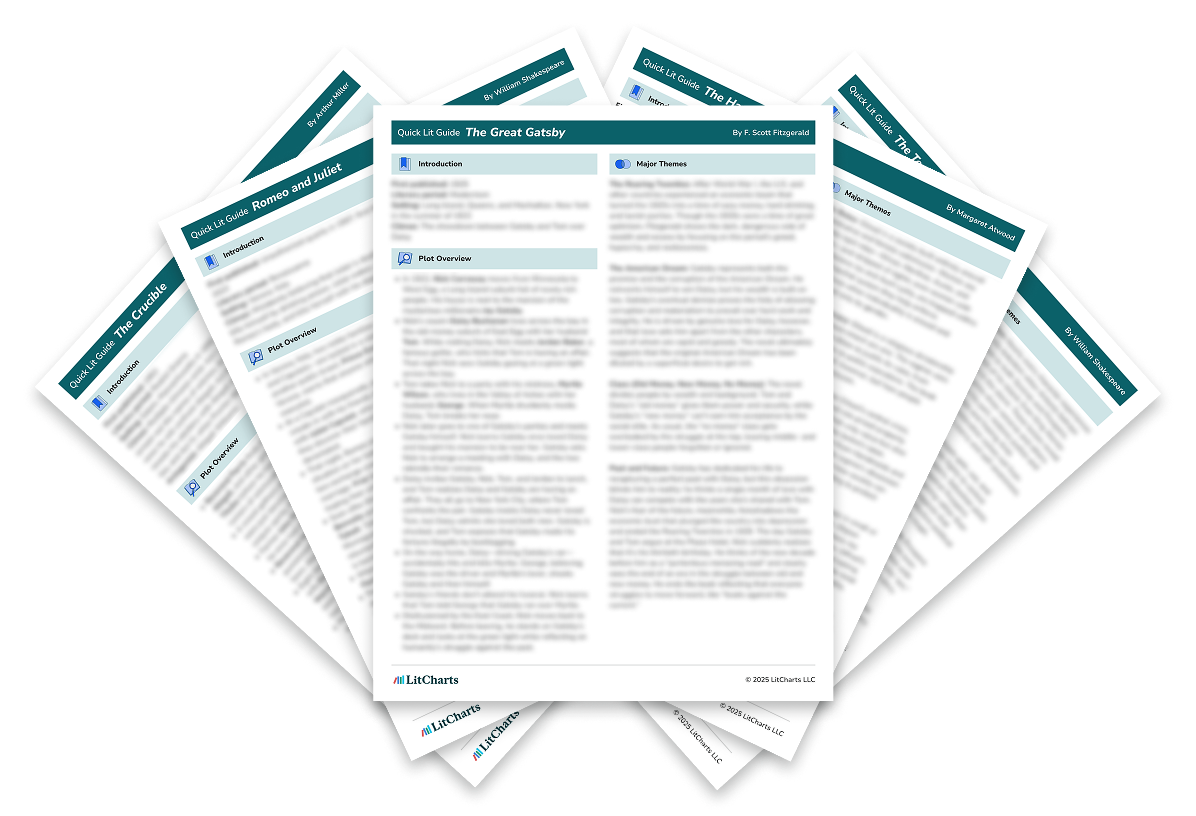
Literature Guide PDFs
LitCharts PDFs for every book you'll read this year.
Instant PDF downloads of all 2256 LitCharts literature guides and of every new one we publish. Try a free sample literature guide.
"Would not have made it through AP Literature without the printable PDFs. They're like having in-class notes for every discussion!"






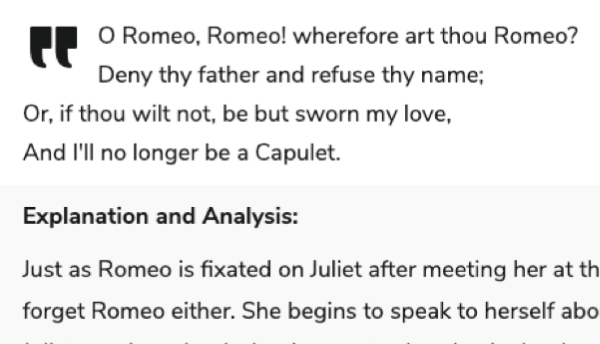
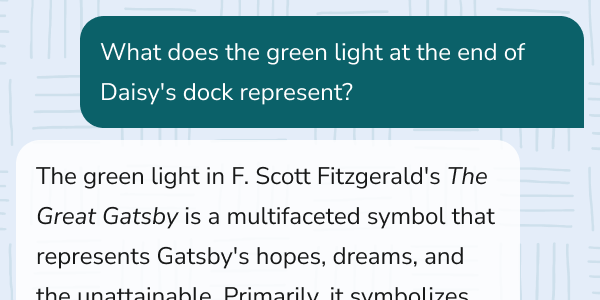
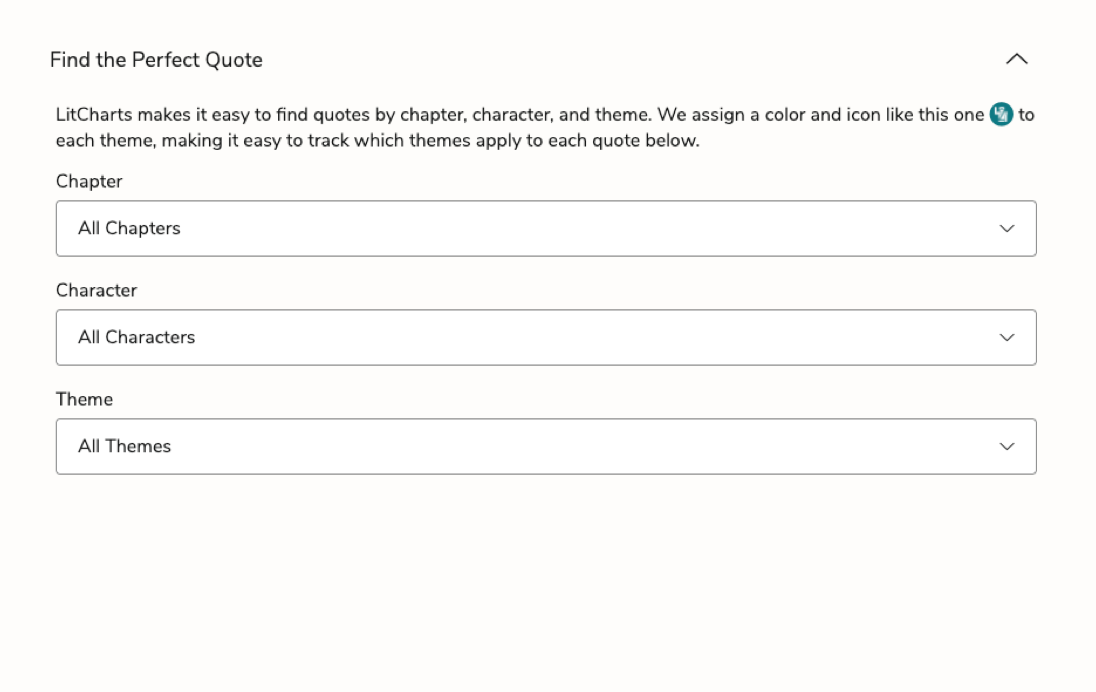
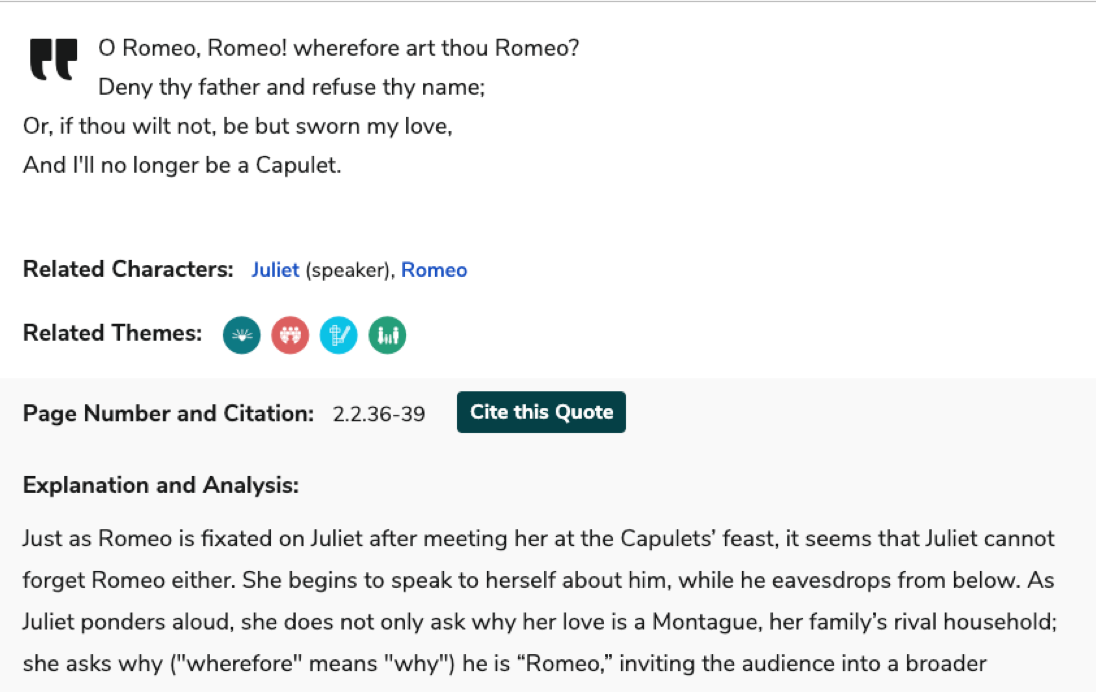
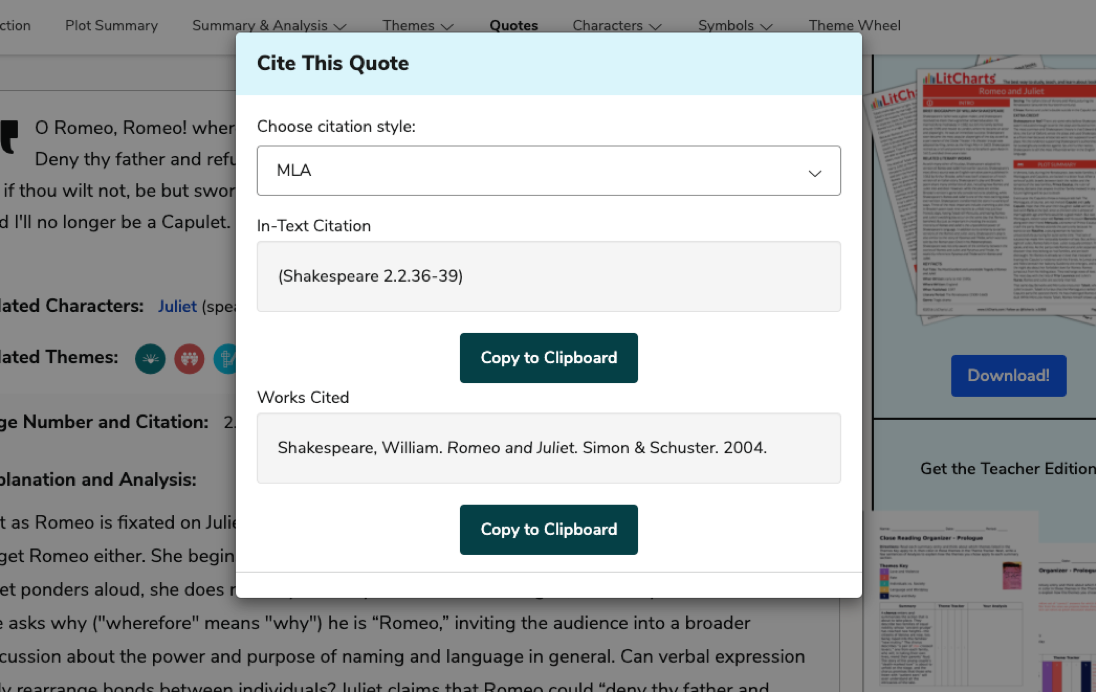
Quotes Explanations
Find the perfect quote. Understand it perfectly. Then rock the citation, too.
For all 50,308 quotes we cover.
For all 50,308 quotes we cover.


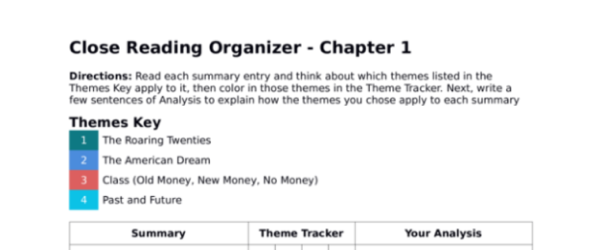
Teacher Editions
Close reading made easy for students.
Time saved for teachers.
For every book we cover.
Time saved for teachers.
For every book we cover.


Common Core-aligned


PDFs of modern translations of every one of Shakespeare's 37 plays, 154 sonnets, and 3 longer poems.

Literary Terms and Devices
Definitions and examples for every literary term and device you need to know.
Plus a quick-reference PDF with concise definitions of all 136 terms in one place.
Plus a quick-reference PDF with concise definitions of all 136 terms in one place.
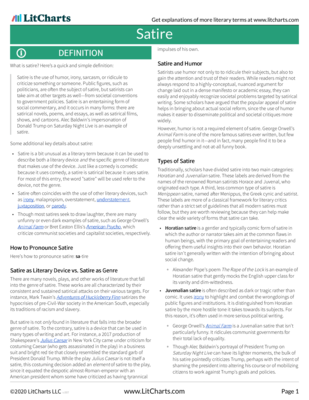
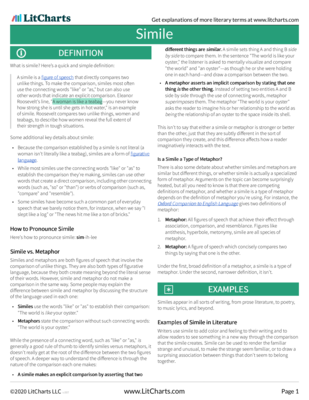
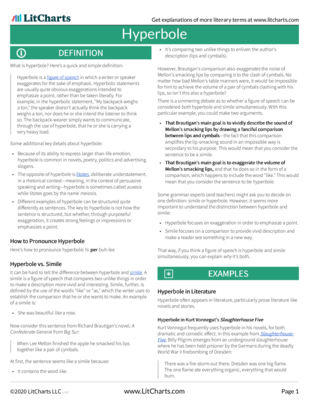
Try a free sample literary term PDF.


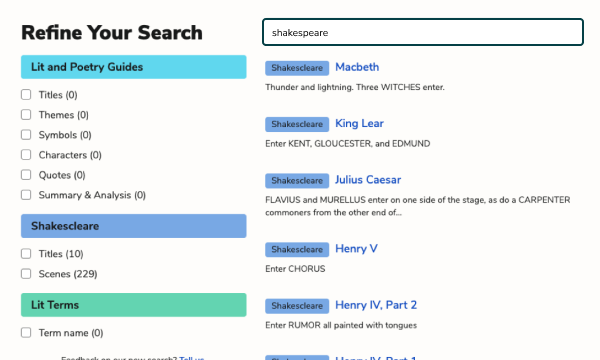
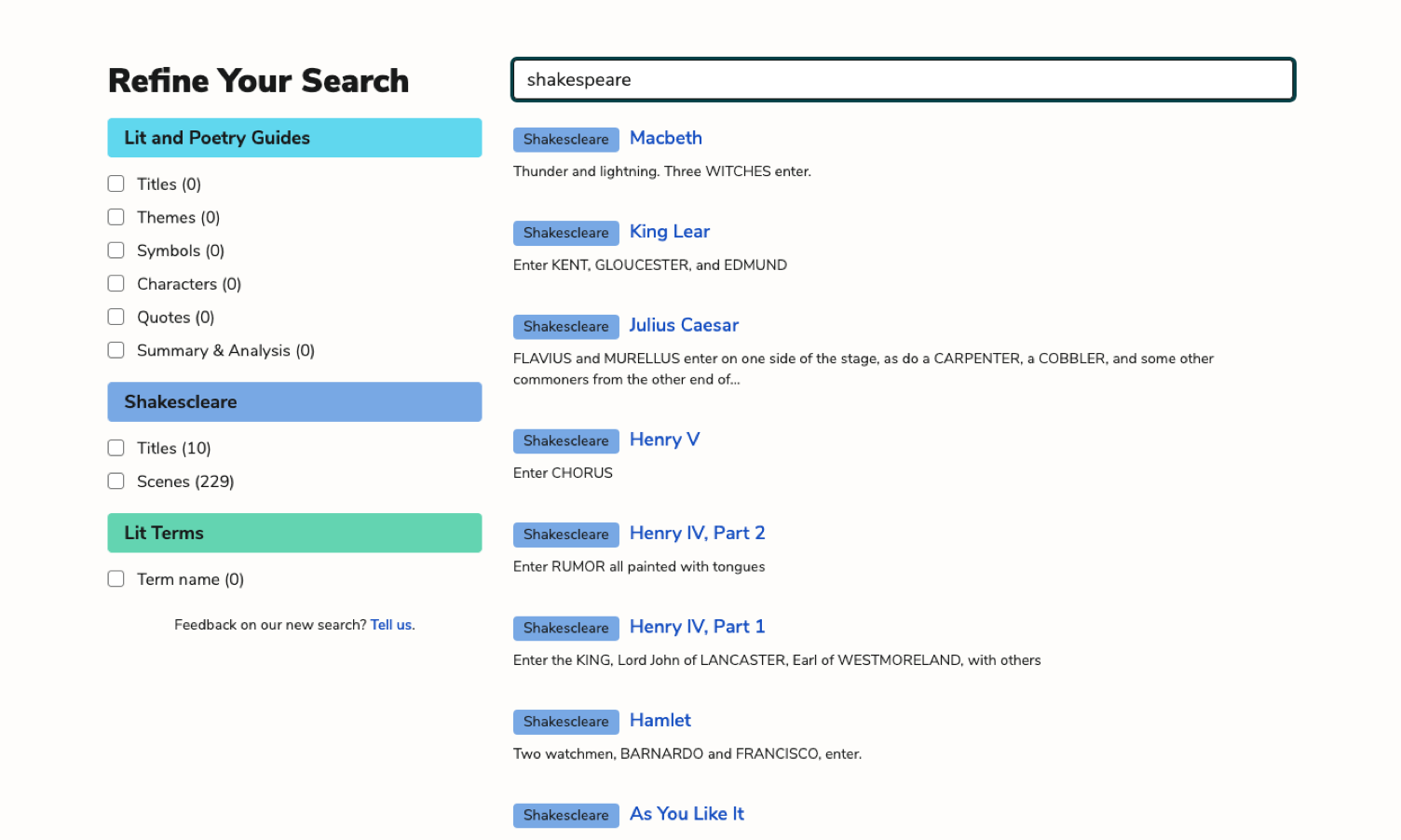
Advanced Search
Refine any search. Find related themes, quotes, symbols, characters, and more.

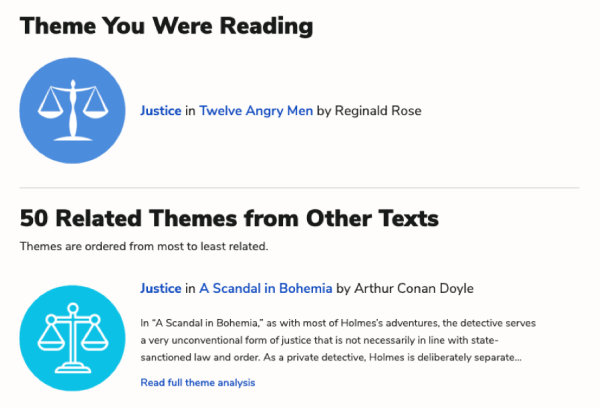
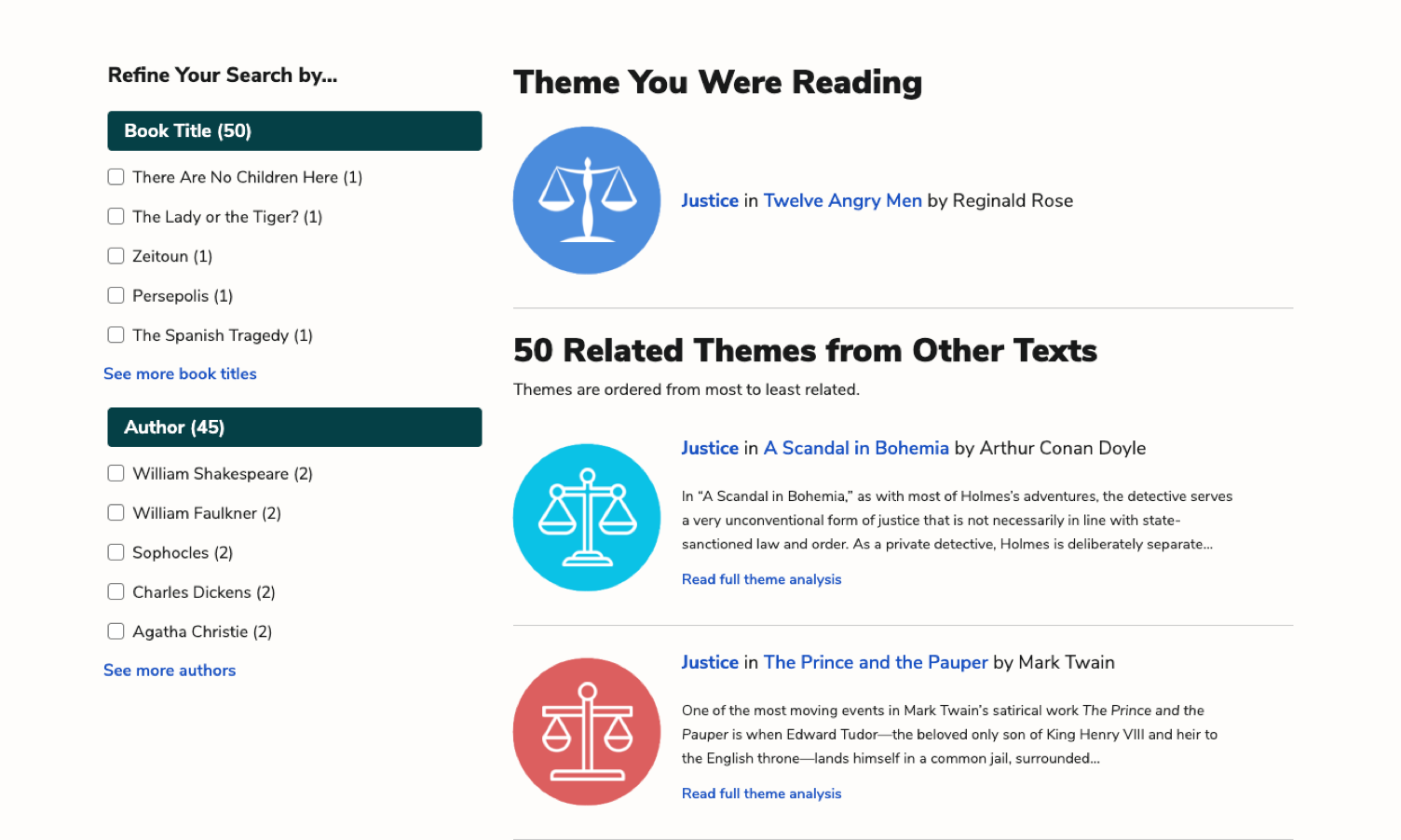
Related Themes
Comparing and contrasting texts? Find where any theme occurs across all of LitCharts in seconds.


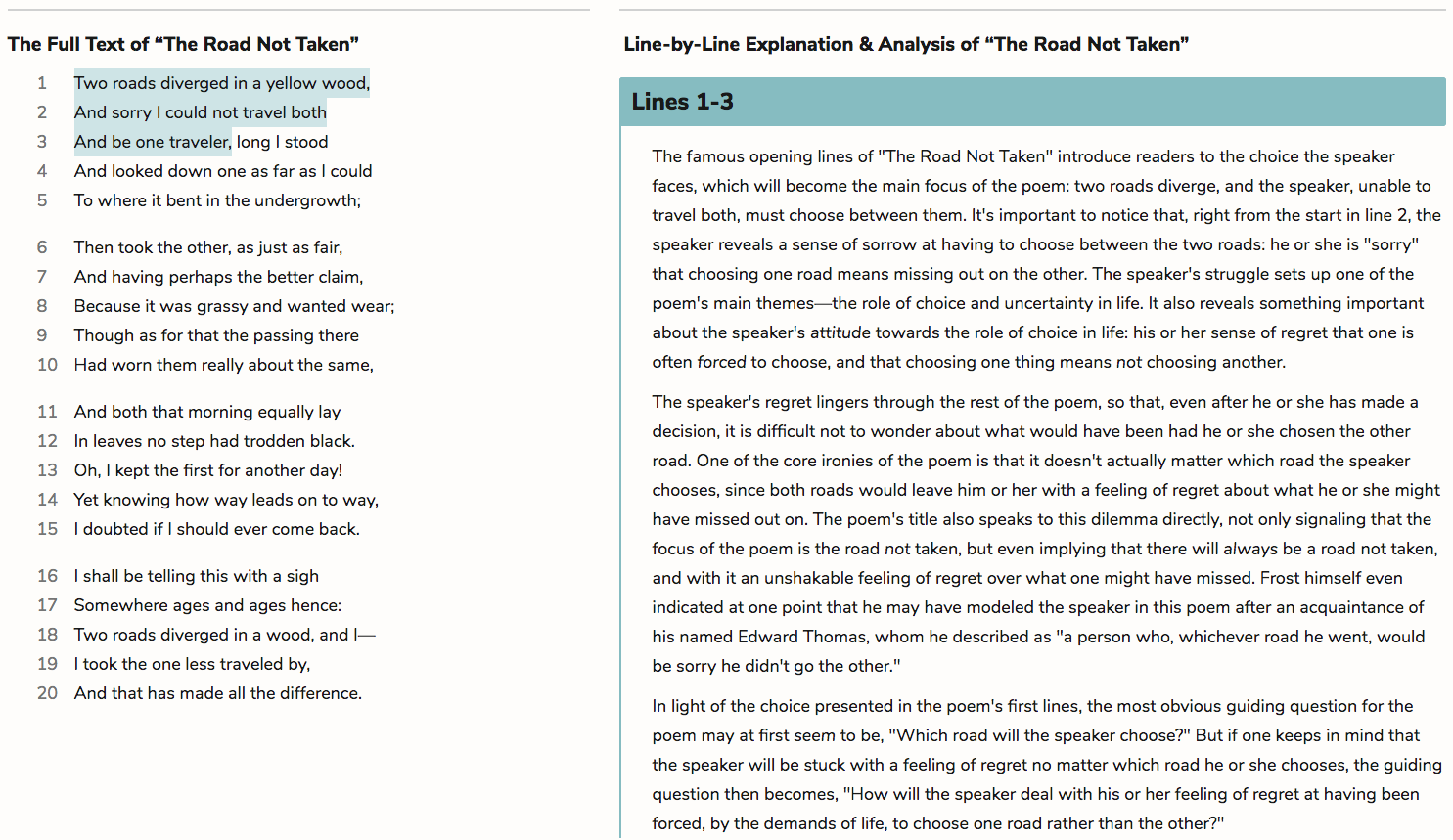
Poetry Guides
Line-by-line explanations and analysis of figurative language and poetic devices.
For every lyric poem we cover.
For every lyric poem we cover.