


|
Have questions?
Contact us
Already a member? Sign in
|
Get every literary device explanation for Death in VenicePlus so much more...
Sign up for LitCharts A+Get instant access to every literary device explanation, plus so much more...
Simile
Explanation and Analysis—Like a Coffin :
In a passage that foreshadows Aschenbach's death at the end of the novel, the narrator uses a simile that compares the famed gondolas of Venice to coffins. When Aschenbach disembarks in Venice and hails a gondola to arrive at his hotel, the narrator states:
Who could avoid experiencing a fleeting shudder, a secret timidity and anxiety upon boarding a Venetian gondola for the first time or after a long absence? The strange conveyance [...] recalls hushed criminal adventures in the night, accompanied only by the quiet splashing of water; even more, it recalls death itself, the bier and the dismal funeral and the final taciturn passage. And have you observed that the seat in such a boat, that armchair painted black like a coffin and upholstered in a dull black, is the softest, most luxurious and enervating seat in the world?
Aschenbach, who has not visited Venice for many years, feels a surprising "fleeting shudder" when he boards the gondola, a small, thin boat that the narrator associates with 'hushed criminal adventures in the night" and "death itself, the bier and the dismal funeral and the final taciturn passage." The narrator, then, casts the gondola in a web of morbid associations, even describing the boat as being "painted black like a coffin." This simile, which highlights the dark color of the gondolas, foreshadows Aschenbach's death at the novel's conclusion, as he falls victim to the cholera outbreak that the city tries in vain to suppress. Aschenbach, then, seems to have a canny vision of his own death as the boards the gondola into the city that he will, ultimately, leave in a coffin.
Monthly
Annual (Best Value)

$595USD/mo
Charged $71.40 USD every year



 Teacher
$795USD/mo
Charged $95.40 USD every year




Literature Guide PDFs
LitCharts PDFs for every book you'll read this year.
Instant PDF downloads of all 2238 LitCharts literature guides and of every new one we publish. Try a free sample literature guide.
"Would not have made it through AP Literature without the printable PDFs. They're like having in-class notes for every discussion!"




Quotes Explanations
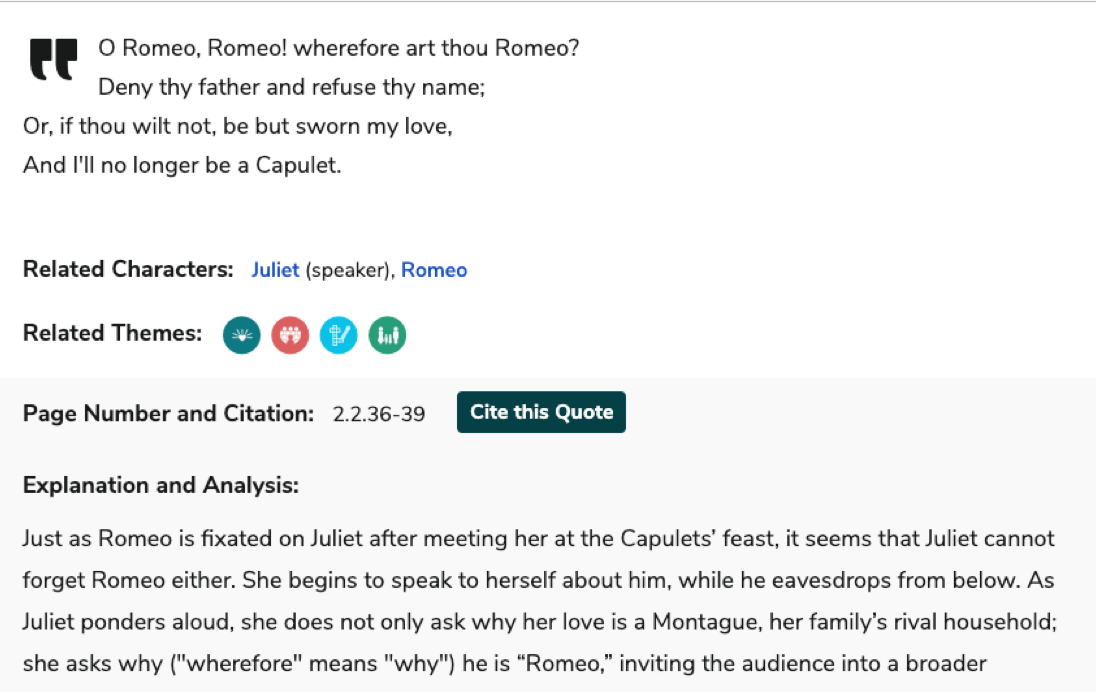
Find the perfect quote. Understand it perfectly. Then rock the citation, too.
For all 49,909 quotes we cover.
For all 49,909 quotes we cover.



Teacher Editions
Close reading made easy for students.
Time saved for teachers.
For every book we cover.
Time saved for teachers.
For every book we cover.


Common Core-aligned


PDFs of modern translations of every one of Shakespeare's 37 plays, 154 sonnets, and 3 longer poems.

Literary Terms and Devices
Definitions and examples for every literary term and device you need to know.
Plus a quick-reference PDF with concise definitions of all 136 terms in one place.
Plus a quick-reference PDF with concise definitions of all 136 terms in one place.


Try a free sample literary term PDF.


Advanced Search
Refine any search. Find related themes, quotes, symbols, characters, and more.

Related Themes
Comparing and contrasting texts? Find where any theme occurs across all of LitCharts in seconds.


Poetry Guides
Line-by-line explanations and analysis of figurative language and poetic devices.
For every lyric poem we cover.
For every lyric poem we cover.
