
|
Have questions?
Contact us
Already a member? Sign in
|
Get every literary device explanation for The CruciblePlus so much more...
Sign up for LitCharts A+Get instant access to every literary device explanation, plus so much more...
Simile
Explanation and Analysis—Sucking Mouth:
Childbirth in the 17th century was a terrifying prospect for everyone involved and often came with grief. In this passage, Miller uses a simile to convey Mrs. Putnam’s profound fear and sorrow regarding the multiple deaths she had to endure as a mother. Pointing to her unconscious daughter, Goody Putnam explains why she called Reverend Parris in to see her:
MRS PUTNAM: Reverend Parris, I have laid seven babies unbaptized in the earth. Believe me, sir, you never saw more hearty babies born. And yet, each would wither in my arms the very night of their birth. I have spoke nothin’, but my heart has clamored intimations. And now, this year, my Ruth, my only- I see her turning strange. A secret child she has become this year, and shrivels like a sucking mouth were pullin’ on her life too. And so I thought to send her to you.
Here, Goody Putnam suspects her former midwives of cursing her, and of trying to kill Ruth, her only living child. By comparing the way Ruth’s condition progresses to “a sucking mouth” that is “pullin’ on her life,” Mrs. Putnam evokes an uncanny, parasitic feeling. It’s as though an unseen force is sapping her daughter’s vitality., which terrifies her. The idea of “sucking” in the context of discussing dying babies also feels frightening, as it suggests that breastfeeding is linked to death or decay.
Although Goody Putnma is particularly misfortunate, it was not at all uncommon for children (or mothers) to die in the process of birth in the 1600s. Expectant mothers had around a one in eight chance of dying in childbirth or from birth-related complications over the course of their lives. Babies had an even lower survival rate. Although Ann Putnam was actually 12 years old and one of the primary accusers in the real Salem witch trials, the real women of Salem of childbearing age and older would almost certainly have known losses like the ones this character describes. With no explanation for why babies seemed to suddenly die, “withering” in their parents’ arms, suspicion often fell on the women who helped in the birthing process. Midwives had a much higher chance of being accused of witchcraft than other members of the community, especially if they were unmarried and were easily scapegoated.
Monthly
Annual (Best Value)

$595USD/mo
Charged $71.40 USD every year
 Teacher
$795USD/mo
Charged $95.40 USD every year
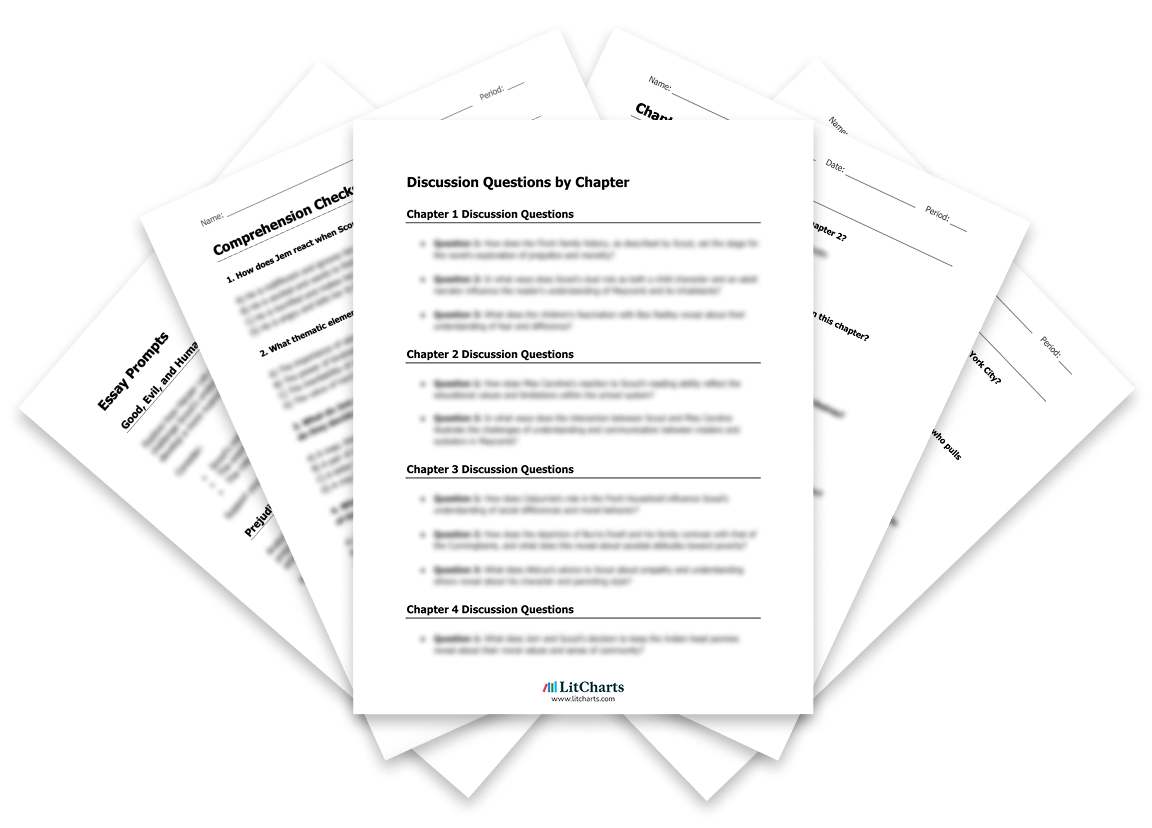


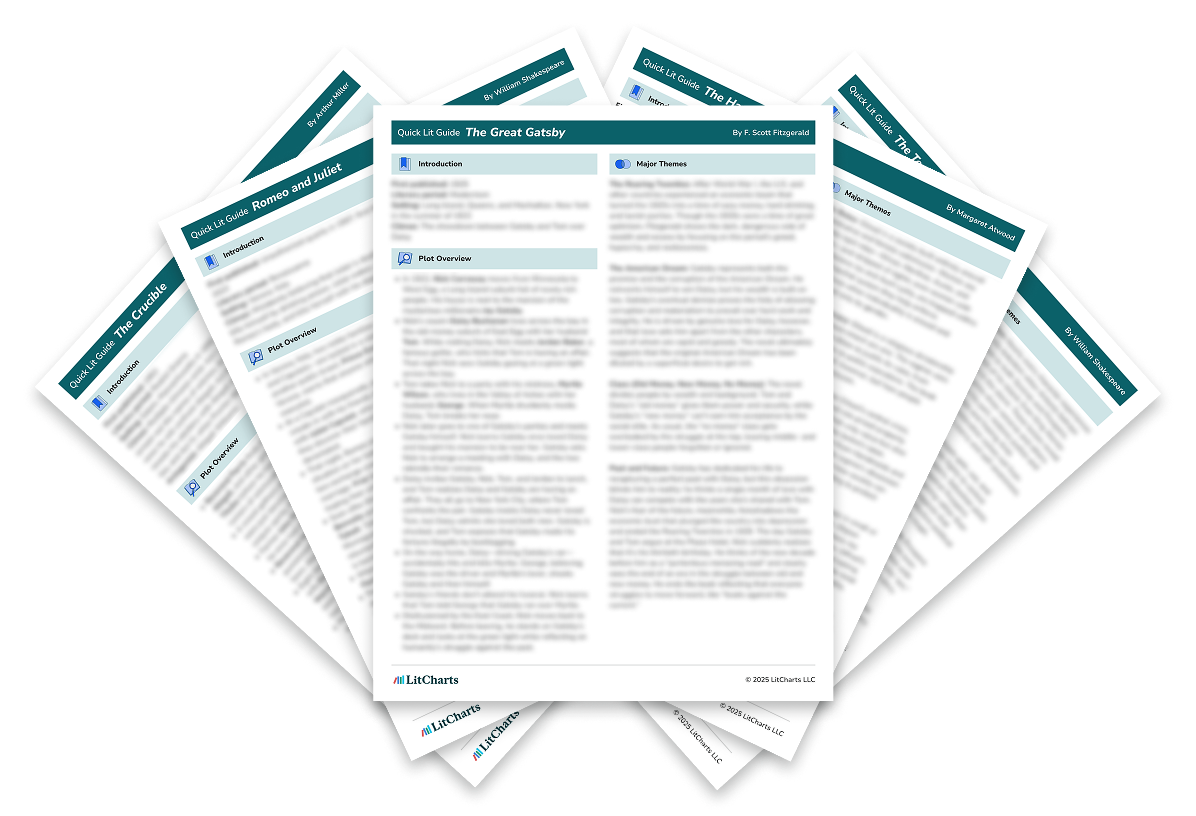
Literature Guide PDFs
LitCharts PDFs for every book you'll read this year.
Instant PDF downloads of all 2252 LitCharts literature guides and of every new one we publish. Try a free sample literature guide.
"Would not have made it through AP Literature without the printable PDFs. They're like having in-class notes for every discussion!"










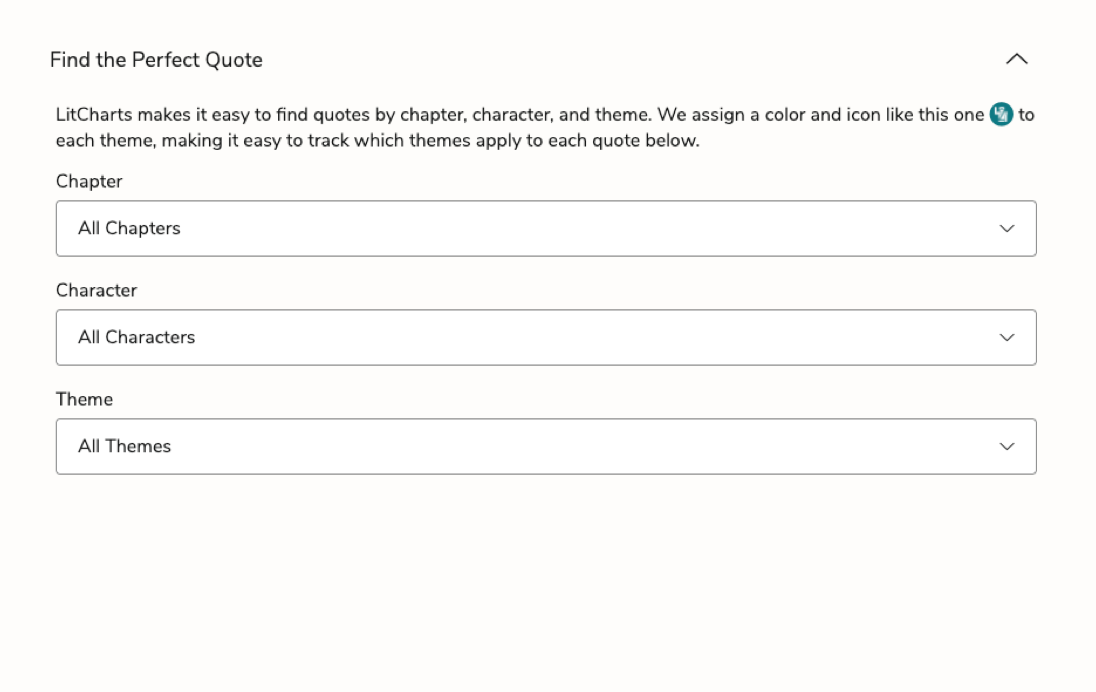
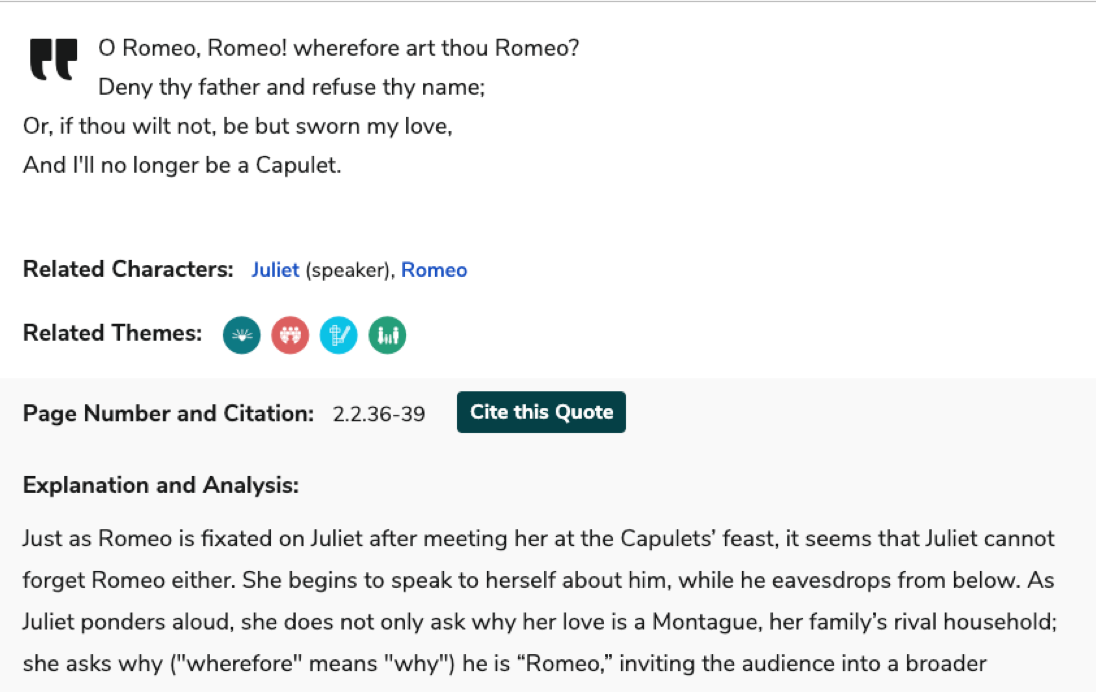
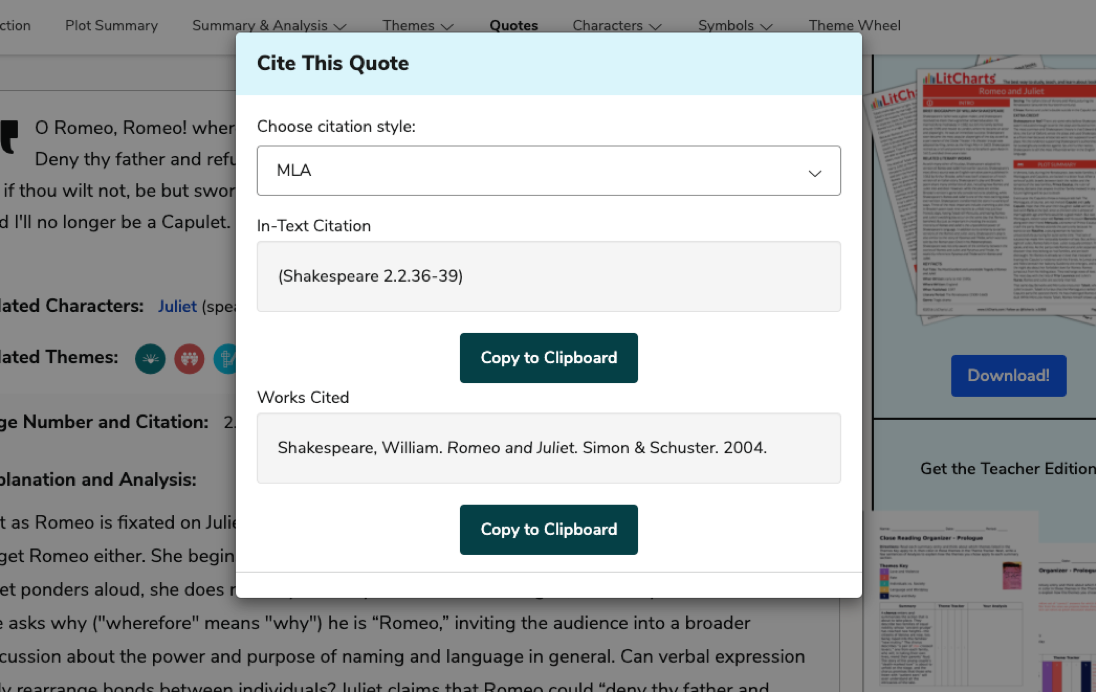
Quotes Explanations
Find the perfect quote. Understand it perfectly. Then rock the citation, too.
For all 50,213 quotes we cover.
For all 50,213 quotes we cover.


Teacher Editions
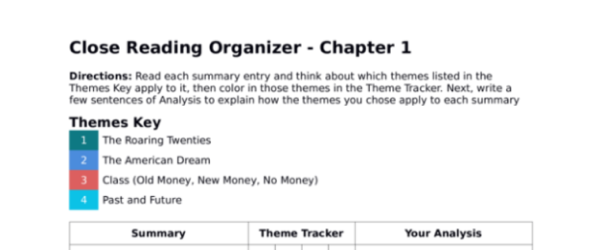
Close reading made easy for students.
Time saved for teachers.
For every book we cover.
Time saved for teachers.
For every book we cover.


Common Core-aligned


PDFs of modern translations of every one of Shakespeare's 37 plays, 154 sonnets, and 3 longer poems.

Literary Terms and Devices
Definitions and examples for every literary term and device you need to know.
Plus a quick-reference PDF with concise definitions of all 136 terms in one place.
Plus a quick-reference PDF with concise definitions of all 136 terms in one place.
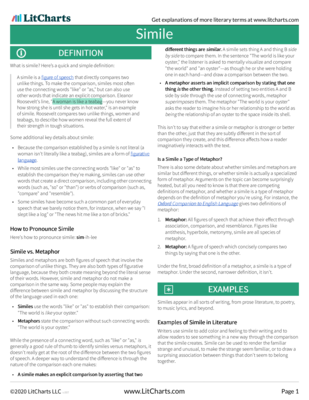
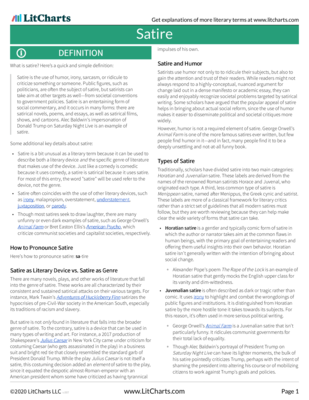
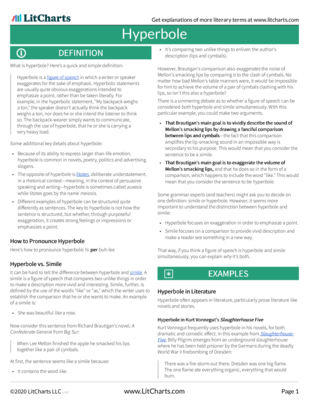
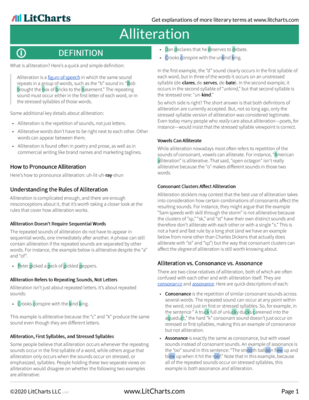
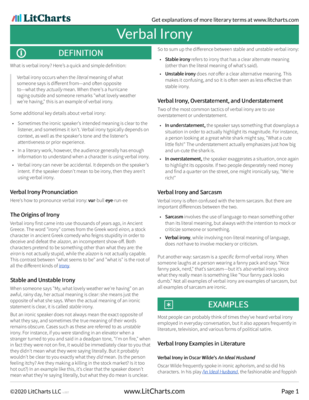
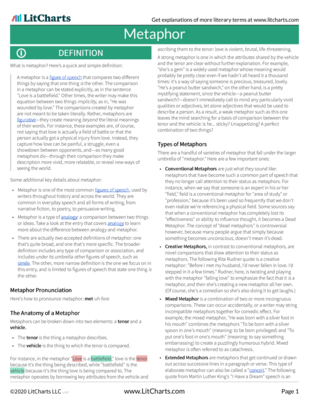
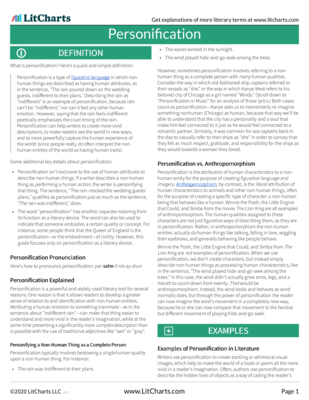
Try a free sample literary term PDF.


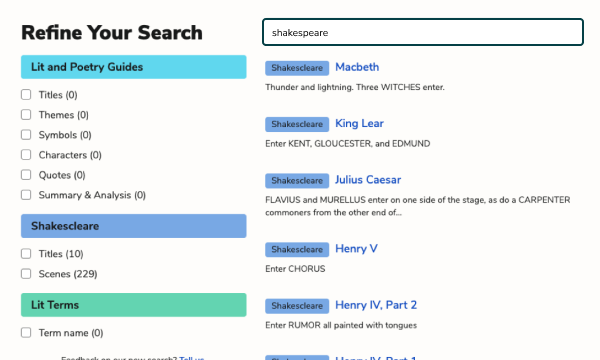
Advanced Search
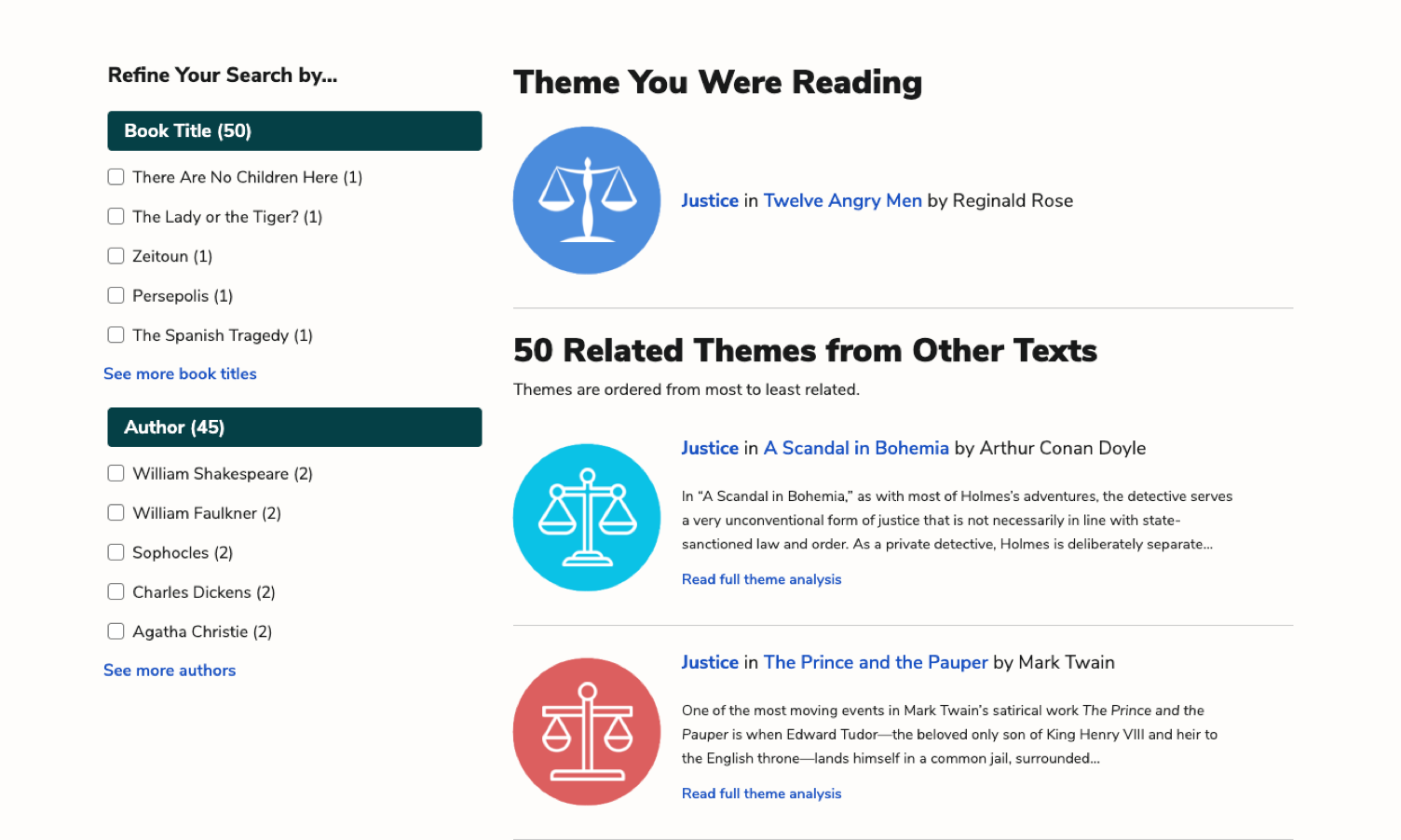
Refine any search. Find related themes, quotes, symbols, characters, and more.
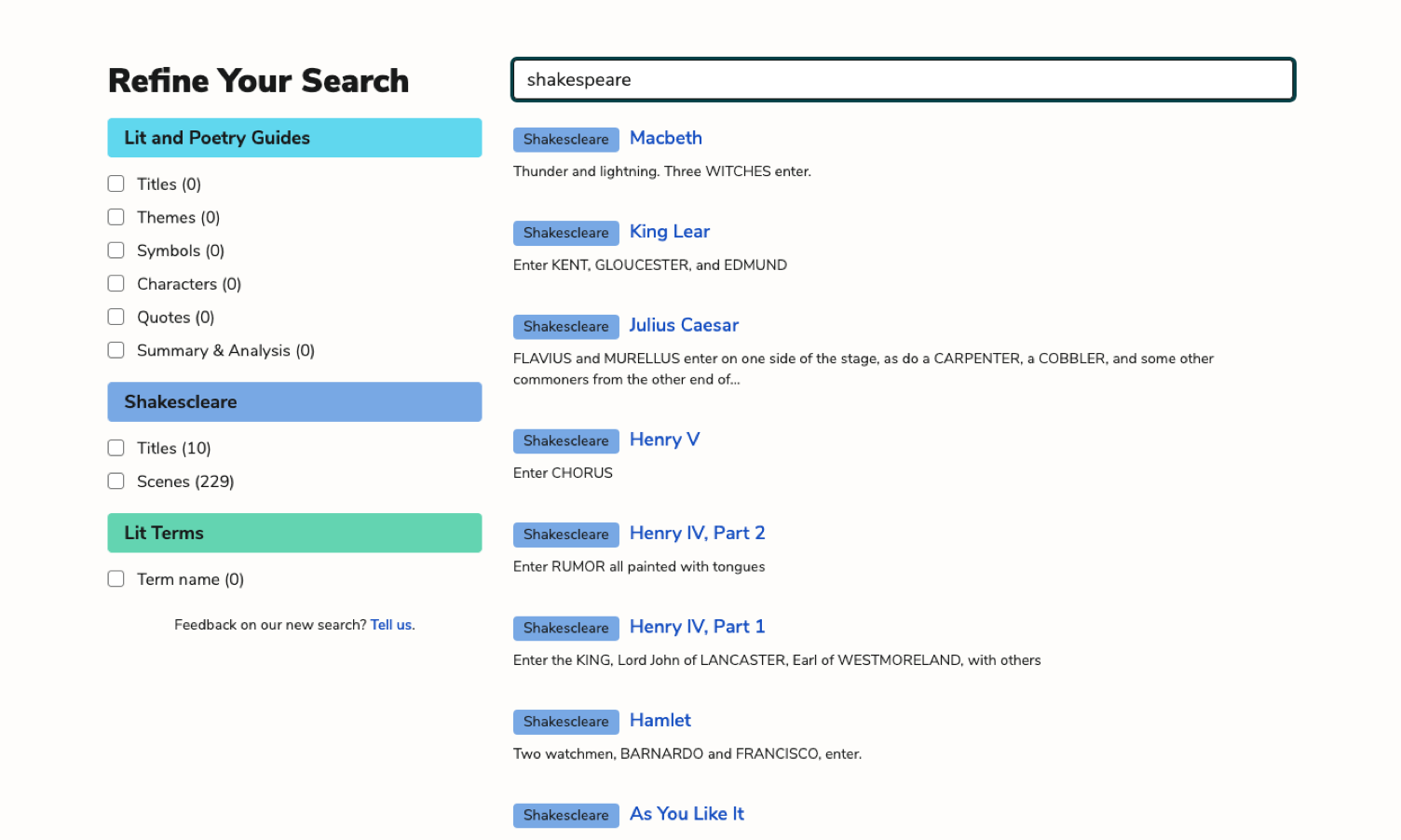

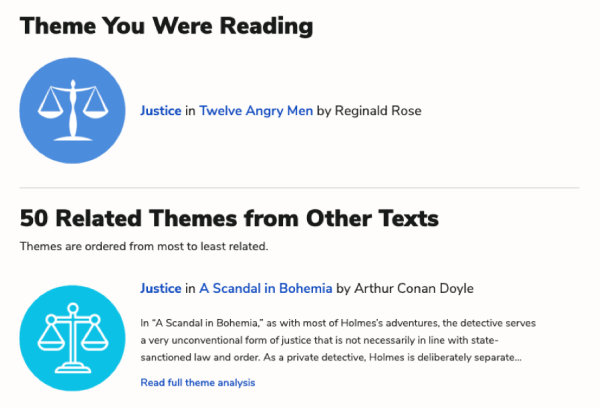
Related Themes
Comparing and contrasting texts? Find where any theme occurs across all of LitCharts in seconds.


Poetry Guides
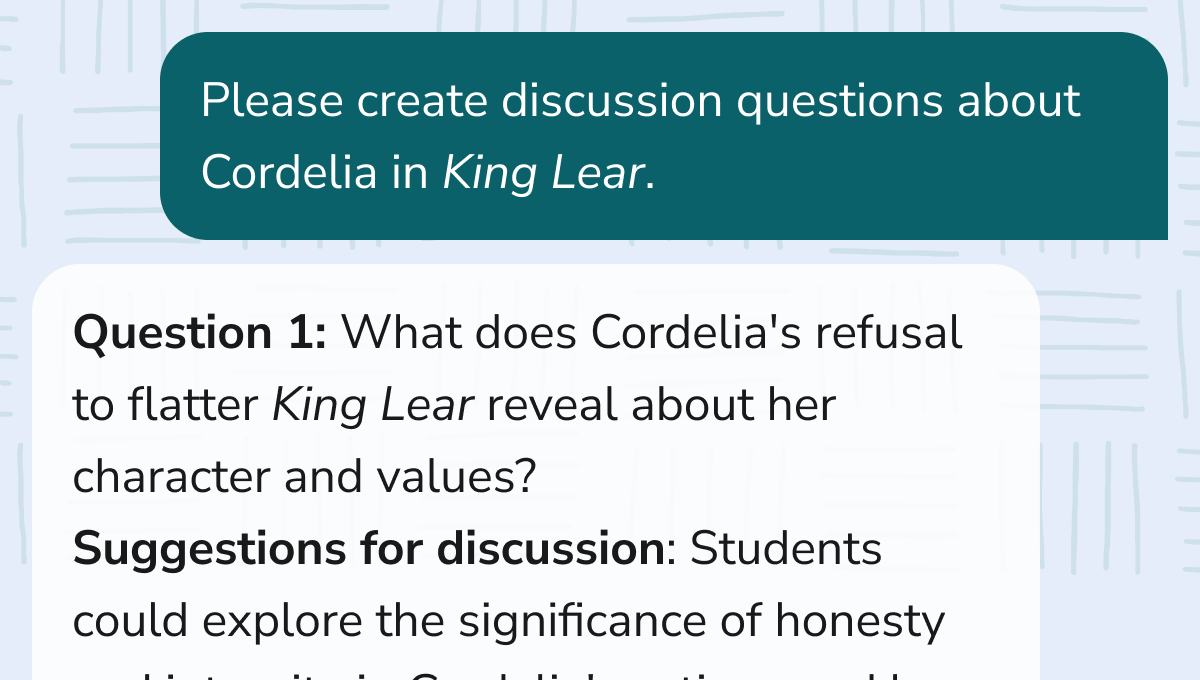
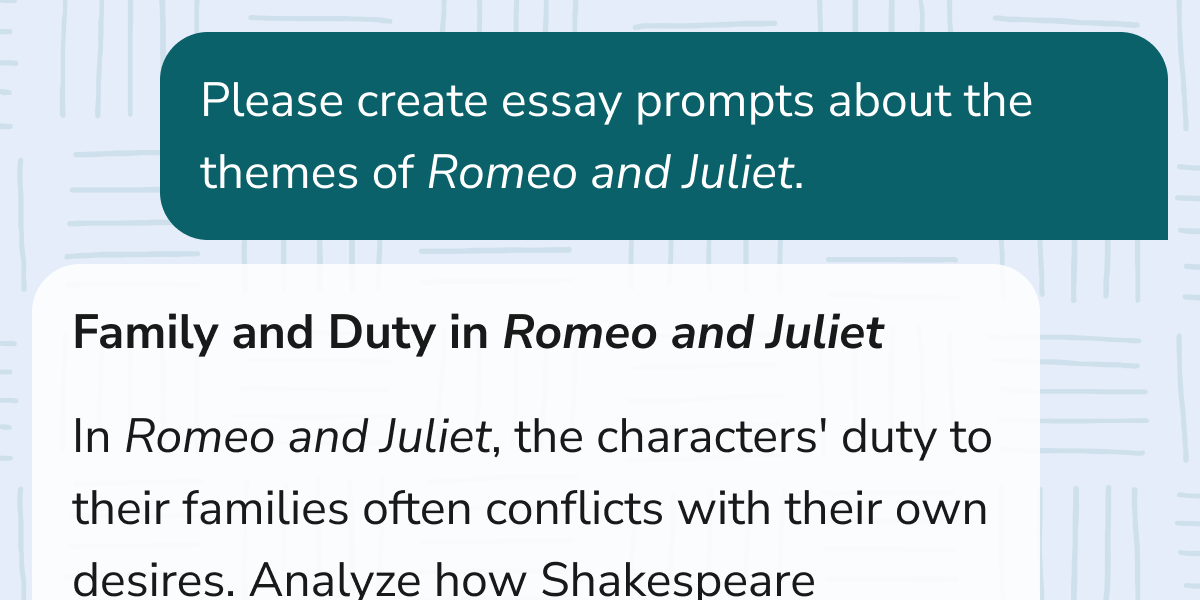
Line-by-line explanations and analysis of figurative language and poetic devices.
For every lyric poem we cover.
For every lyric poem we cover.