
|
Have questions?
Contact us
Already a member? Sign in
|
Get every literary device explanation for The StrangerPlus so much more...
Sign up for LitCharts A+Get instant access to every literary device explanation, plus so much more...
Situational Irony
Explanation and Analysis—Lost Dog:
Despite initially appearing to despise his dog, dragging him along on walks and beating him frequently, Salamano ironically becomes distraught when the dog runs away:
He was looking down at the tips of his shoes and his scabby hands were trembling. Without looking up at me he asked, “They’re not going to take him away from me, are they, Monsieur Meursault? They’ll give him back to me. Otherwise, what’s going to happen to me?” I told him that the pound kept dogs for three days so that their owners could come and claim them and that after that they did with them as they saw fit. [...] from the peculiar little noise coming through the partition, I realized he was crying. For some reason I thought of Maman.
The situation is ironic in that the old man drove the dog away by beating it, only to then weep over its disappearance. The notion that people don't know what they have until it's gone comes up again and again throughout The Stranger, from Raymond and his mistress to Meursault and his introspection while on death row. It also shows the complications and contradictions that make up who people are: one page earlier, Salamano proclaims “pay money for that bastard—ha! He can damn well die!” before later being brought to tears over the dog. Salamano feels incredibly negatively, and incredibly positively, toward his dog, caught up in the contradictions of feeling. The inability to understand life is, for Camus, foundational to the absurd, and it is demonstrated in these unintelligible contradictions.
Salamano, in demonstrating a deep emotional attachment to his dog, also serves as a foil for Meursault, whose apathy is his defining characteristic. While Meursault "for some reason" thinks of Maman after hearing Salamano cry, he doesn't connect that crying to his own emotions. Meursault, in other words, does not demonstrate the same emotional range of other characters in the novella. If Meursault thinks of Maman because he feels similarly to Salamno, he isn't able to admit that to himself or to the reader.
Monthly
Annual (Best Value)

$595USD/mo
Charged $71.40 USD every year

 Teacher
$795USD/mo
Charged $95.40 USD every year
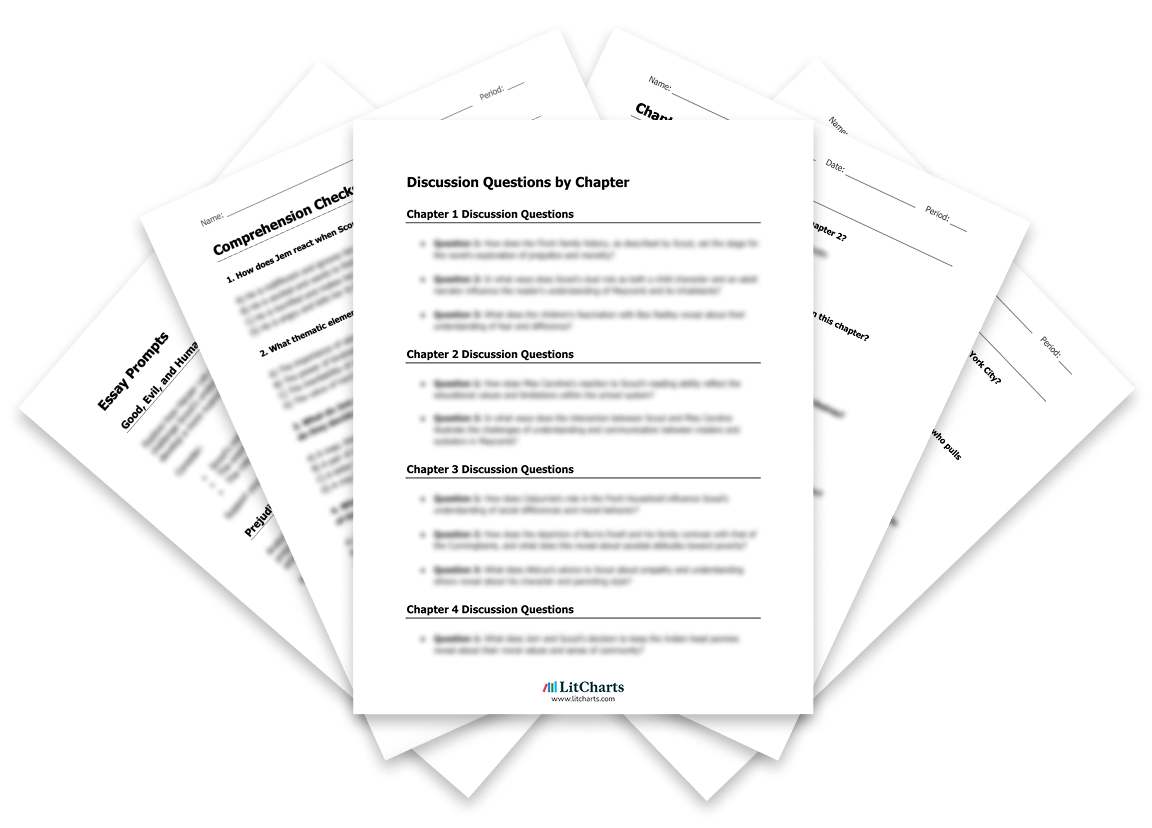




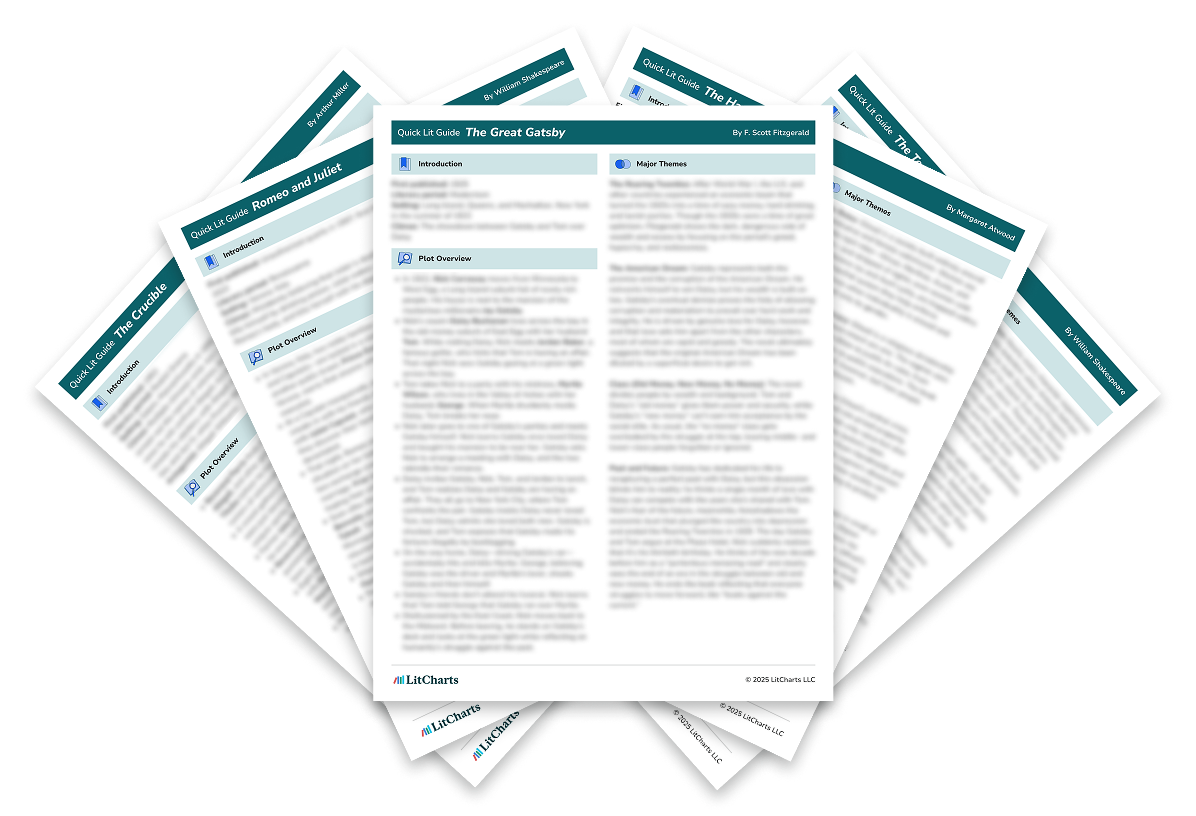
Literature Guide PDFs
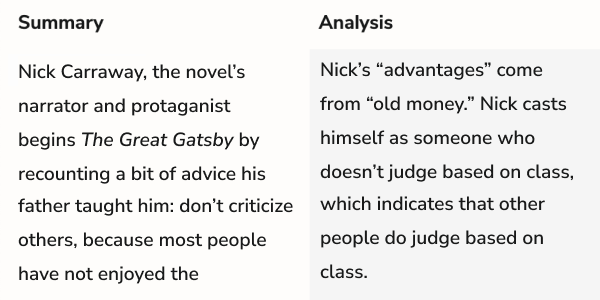
LitCharts PDFs for every book you'll read this year.
Instant PDF downloads of all 2252 LitCharts literature guides and of every new one we publish. Try a free sample literature guide.
"Would not have made it through AP Literature without the printable PDFs. They're like having in-class notes for every discussion!"










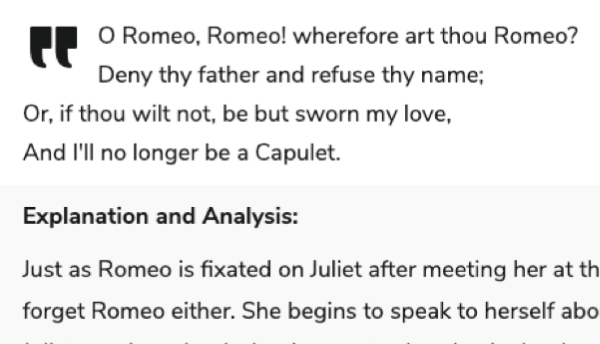
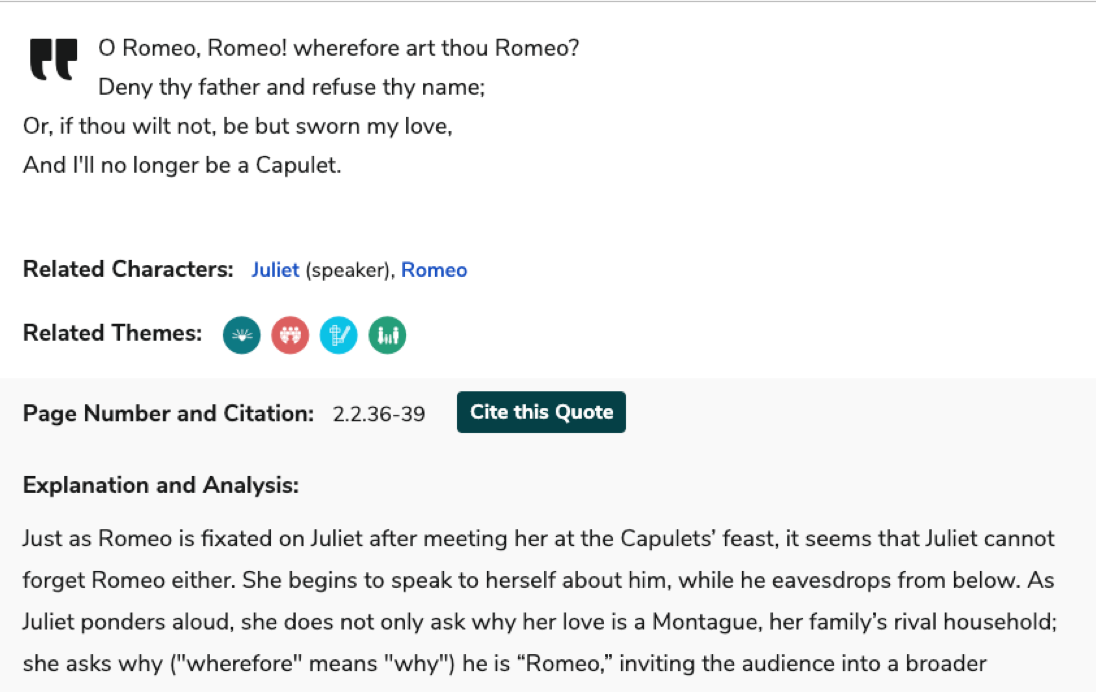
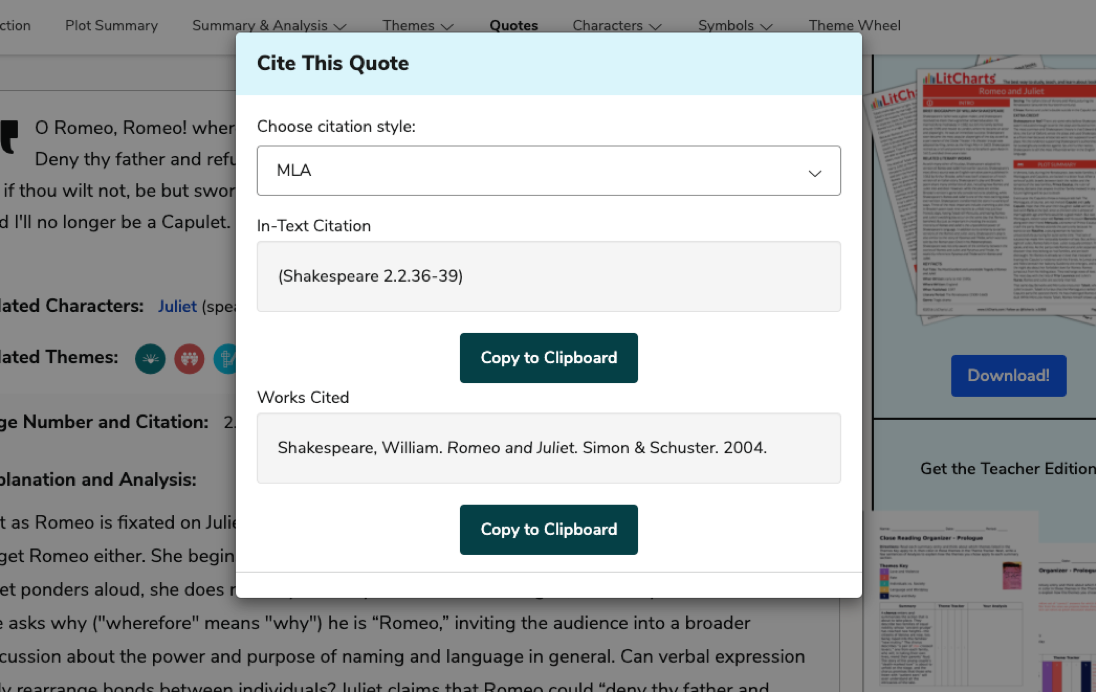
Quotes Explanations
Find the perfect quote. Understand it perfectly. Then rock the citation, too.
For all 50,213 quotes we cover.
For all 50,213 quotes we cover.



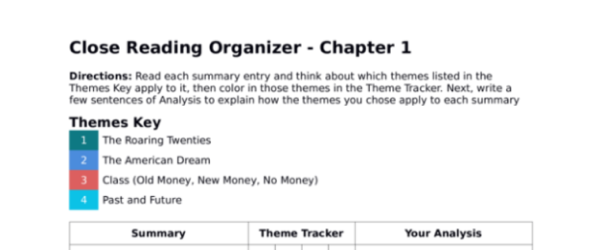
Teacher Editions
Close reading made easy for students.
Time saved for teachers.
For every book we cover.
Time saved for teachers.
For every book we cover.


Common Core-aligned


PDFs of modern translations of every one of Shakespeare's 37 plays, 154 sonnets, and 3 longer poems.

Literary Terms and Devices
Definitions and examples for every literary term and device you need to know.
Plus a quick-reference PDF with concise definitions of all 136 terms in one place.
Plus a quick-reference PDF with concise definitions of all 136 terms in one place.
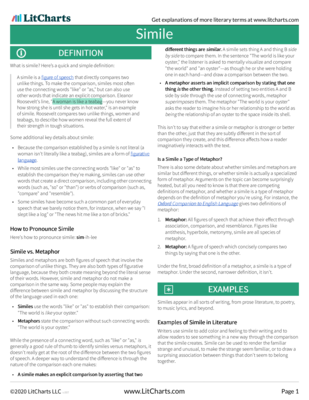
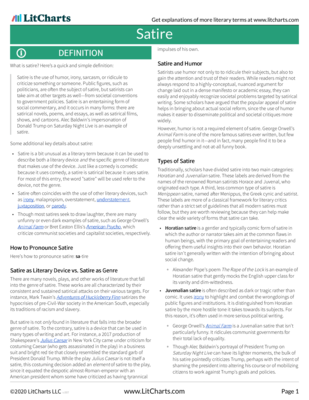
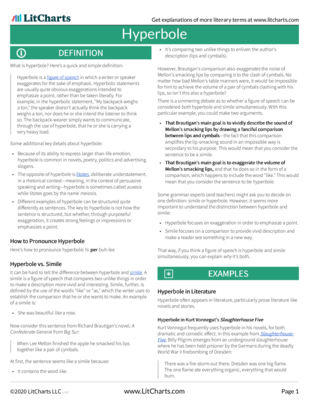
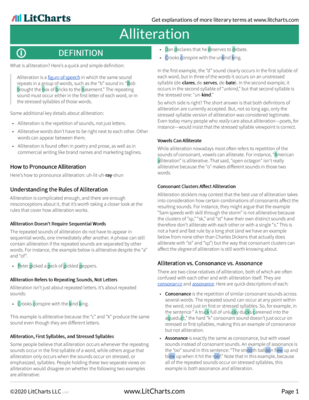
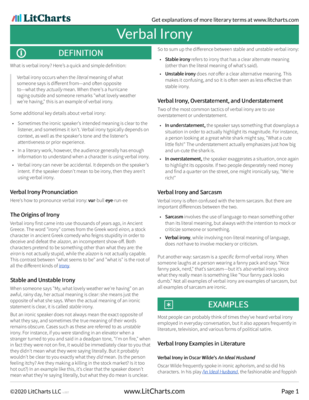
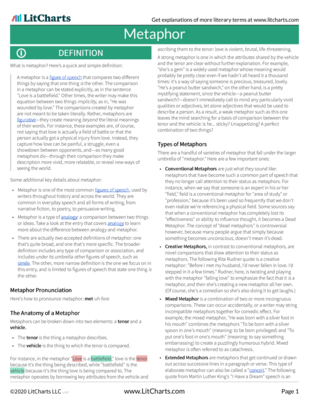
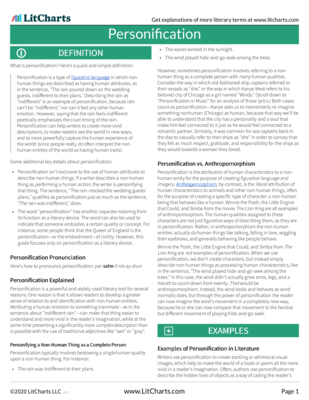
Try a free sample literary term PDF.


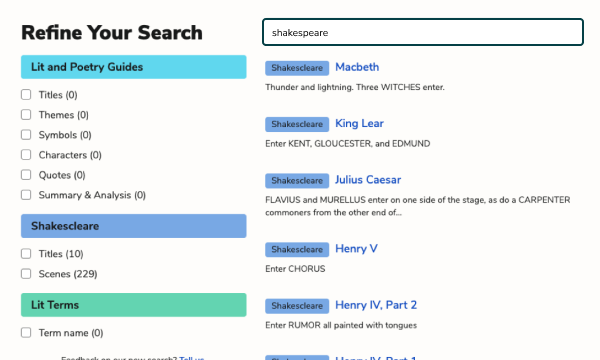
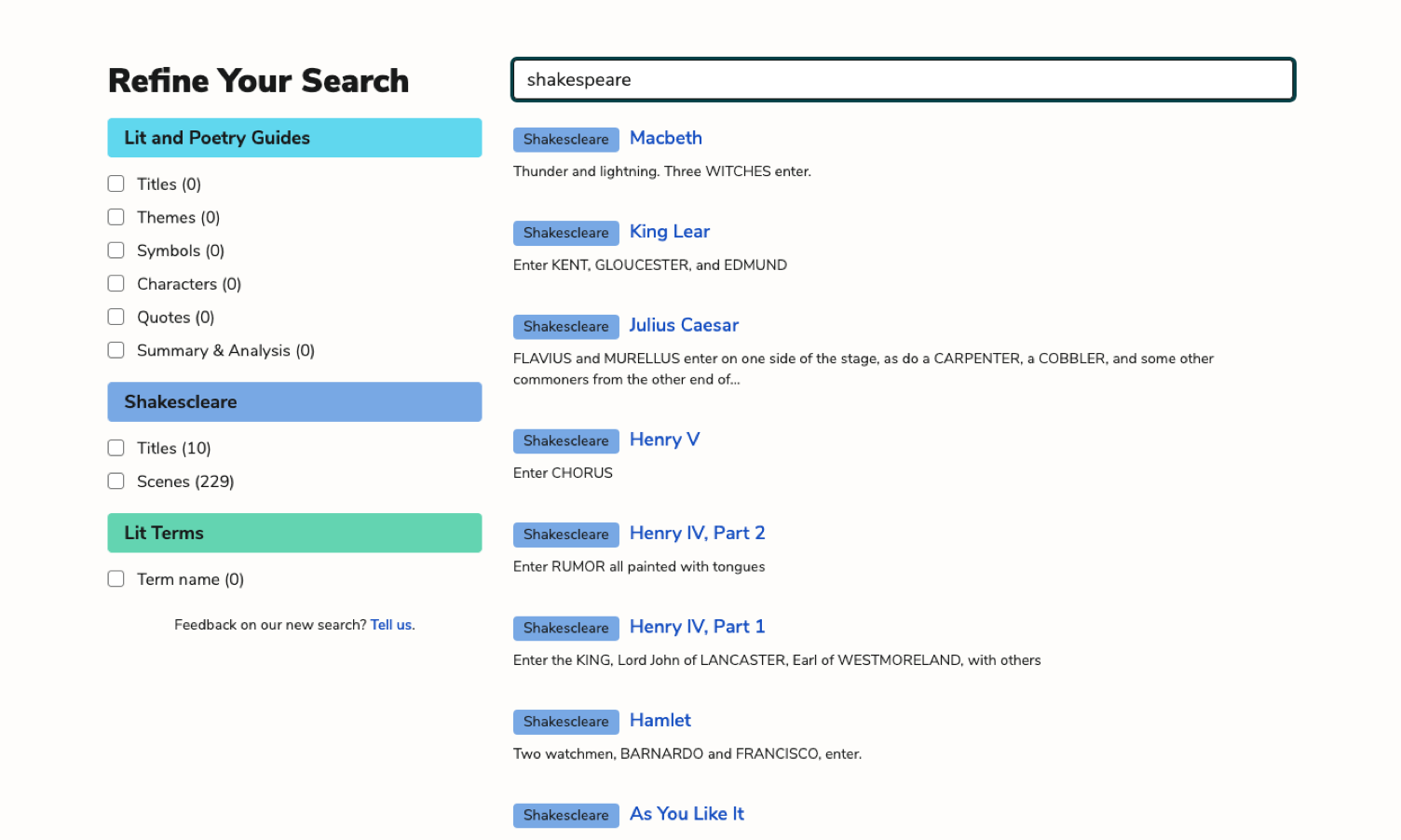
Advanced Search
Refine any search. Find related themes, quotes, symbols, characters, and more.

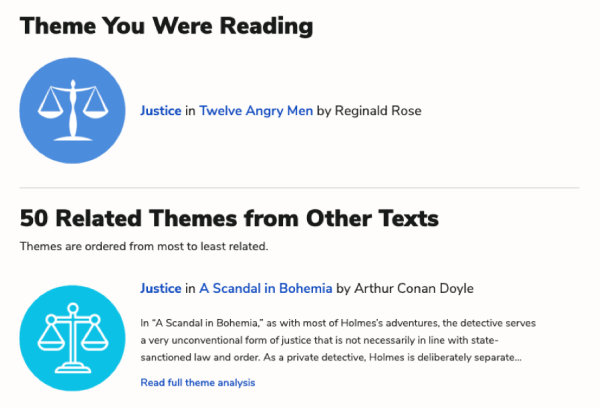
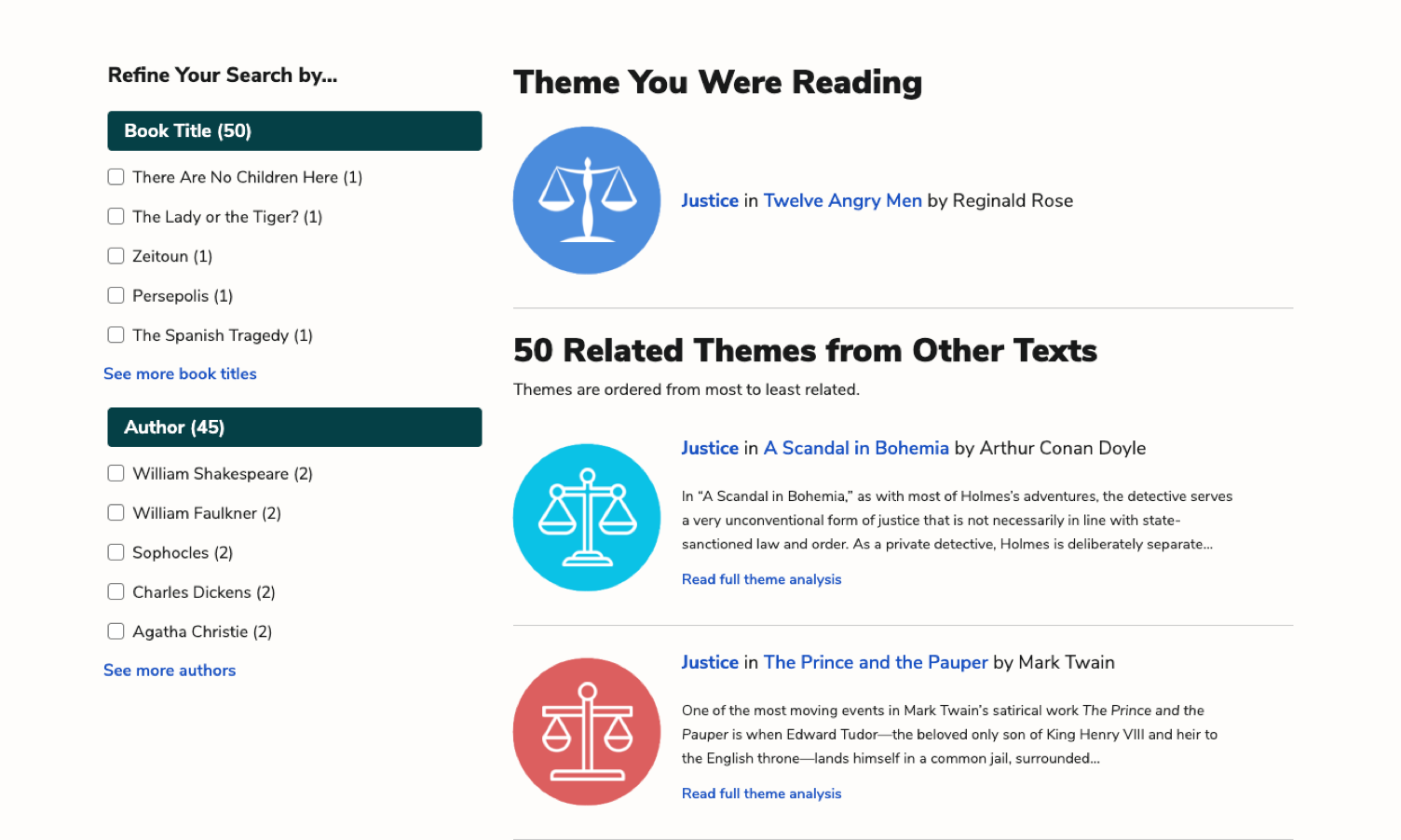
Related Themes
Comparing and contrasting texts? Find where any theme occurs across all of LitCharts in seconds.


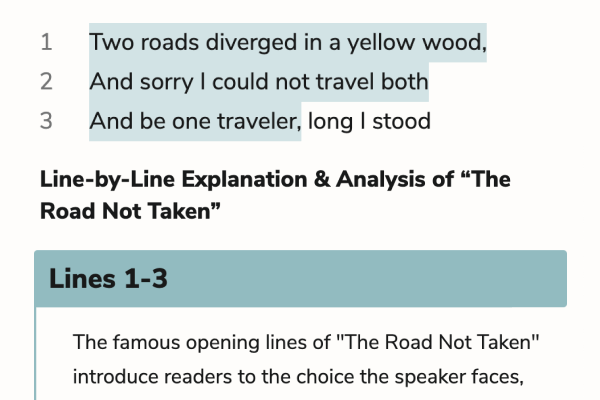
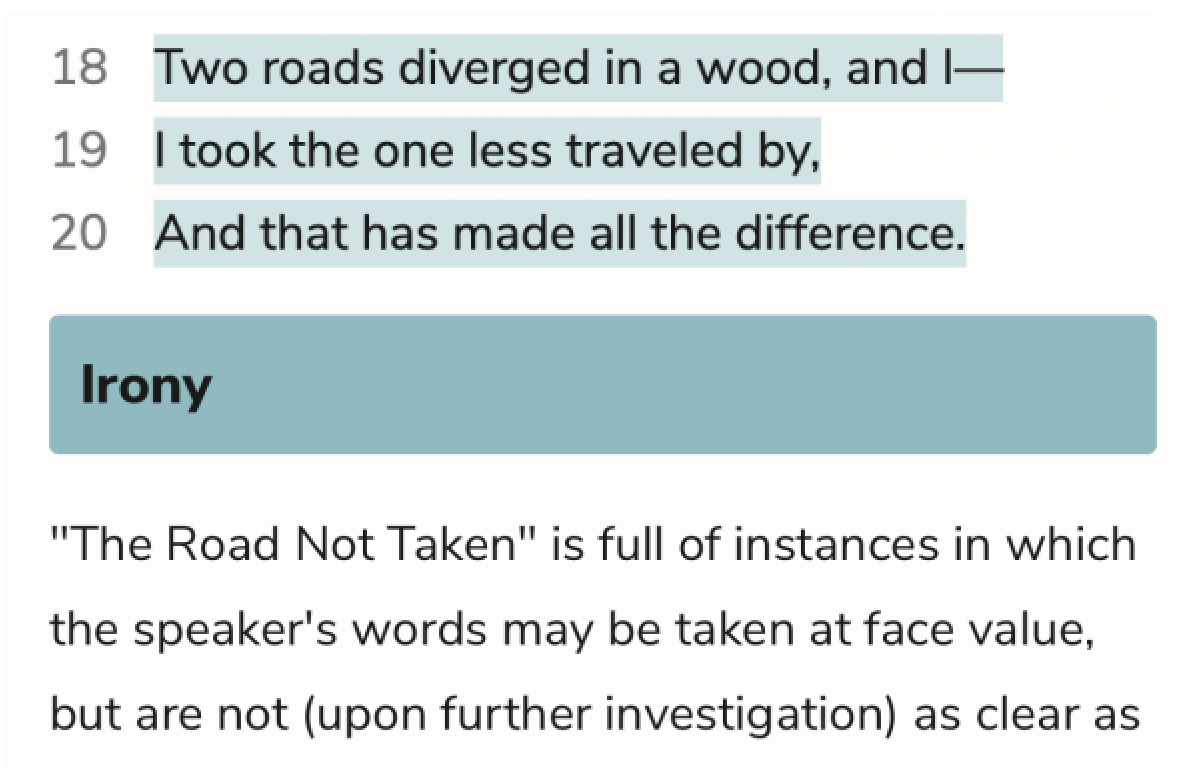
Poetry Guides
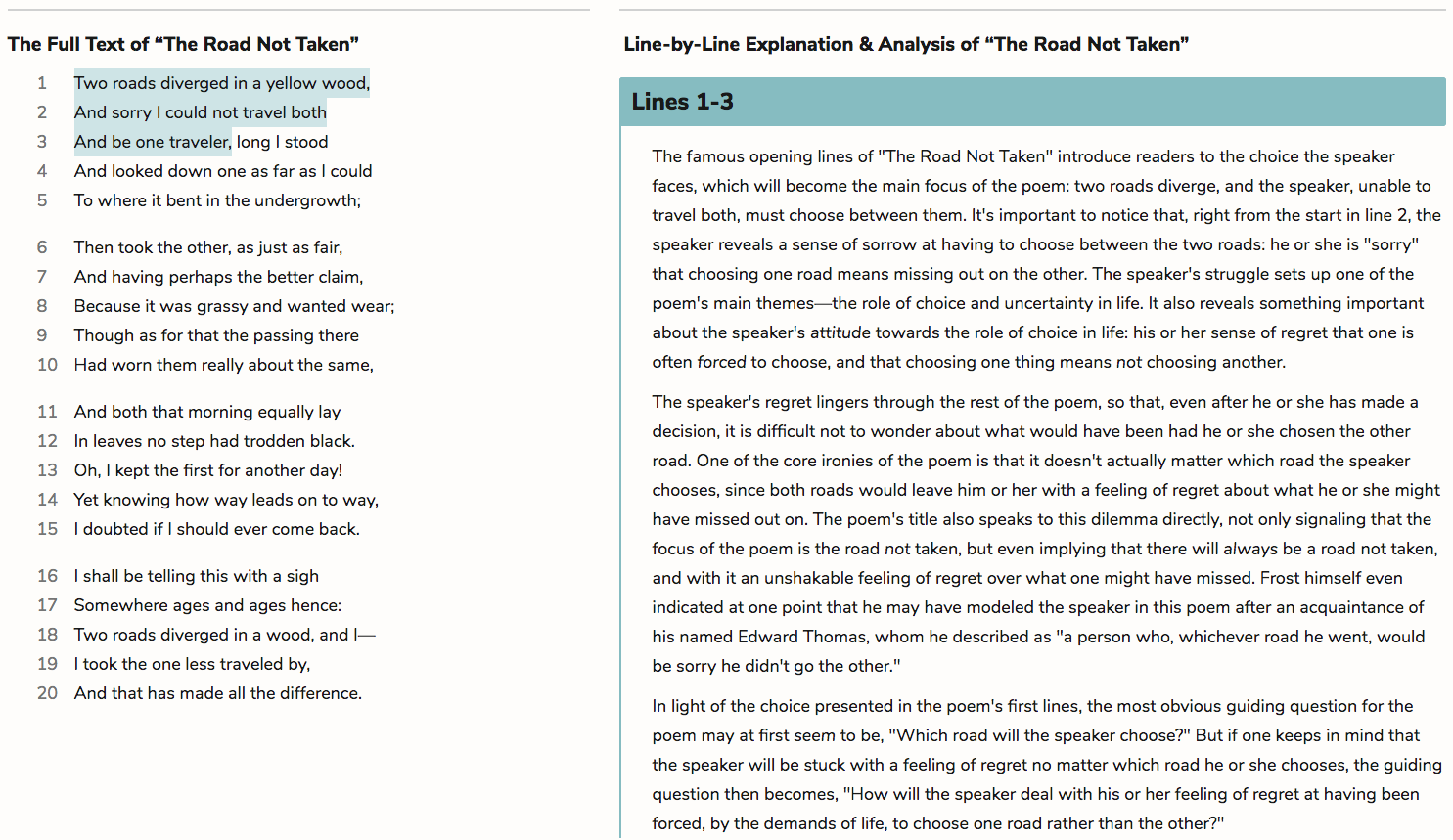
Line-by-line explanations and analysis of figurative language and poetic devices.
For every lyric poem we cover.
For every lyric poem we cover.