
|
Have questions?
Contact us
Already a member? Sign in
|
Get every literary device explanation for Richard III
Plus so much more...
Sign up for LitCharts A+
Get instant access to every literary device explanation, plus so much more...
Verbal Irony
Explanation and Analysis—Unfit for State :
In Act 3, Scene 7, Richard "protests" against being given the responsibilities of the kingship. In a speech full of hyperbole and dramatic and verbal irony, he fakes humility to the Mayor of London:
Alas, why would you heap this care on me?
I am unfit for state and majesty;
I do beseech you, take it not amiss;
I cannot, nor I will not, yield to you.
This is a clear instance of dramatic irony, as the audience has been witness for the entire play to Richard’s ruthless ambition for the crown. His fake reluctance is also a manifestation of verbal irony, as he says one thing and means another. At this point in the play, there's a large number of people around Richard who believe he's the best choice to rule the country. The audience can only watch in horror as his manipulations come to fruition.
Richard's false humility is masterful in its execution. In this passage, he portrays himself as the dutiful servant burdened with a responsibility he does not seek. He uses hyperbole to describe himself as "unfit" for the things he's been training his entire life for, and to make kingship seem like a weight that would be "heaped" on him. He begs the Lord Mayor not to be offended or "take it amiss" that he is refusing. He even treats the repeated requests and demands to become king he's being given as if they are annoying impositions, saying he won't "yield" to them. This is also a reference to his "reluctance" to be physically crowned, where he'd kneel or sit, "yielding" to the responsibility. Of course, this false modesty only serves to build his reputation for humility and self-effacement in the eyes of his subjects.
Monthly
Annual (Best Value)

$595USD/mo
Charged $71.40 USD every year
 Teacher
$795USD/mo
Charged $95.40 USD every year
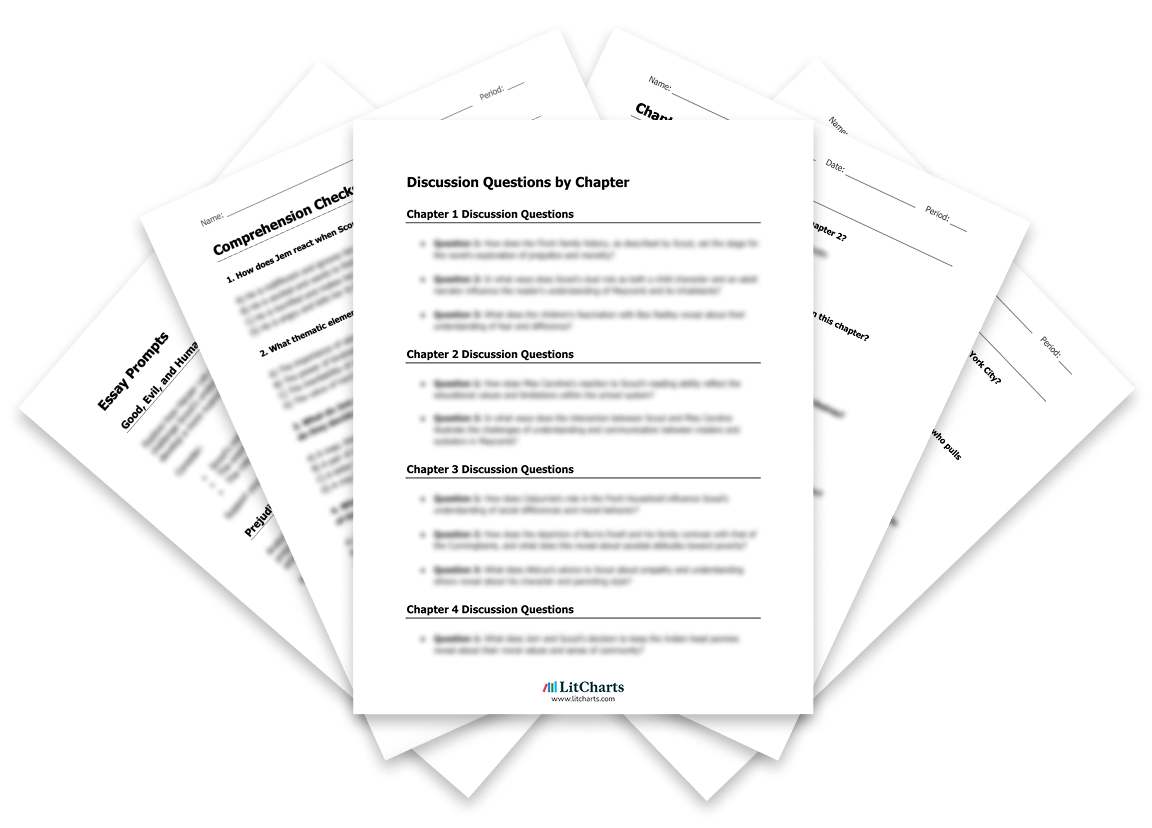


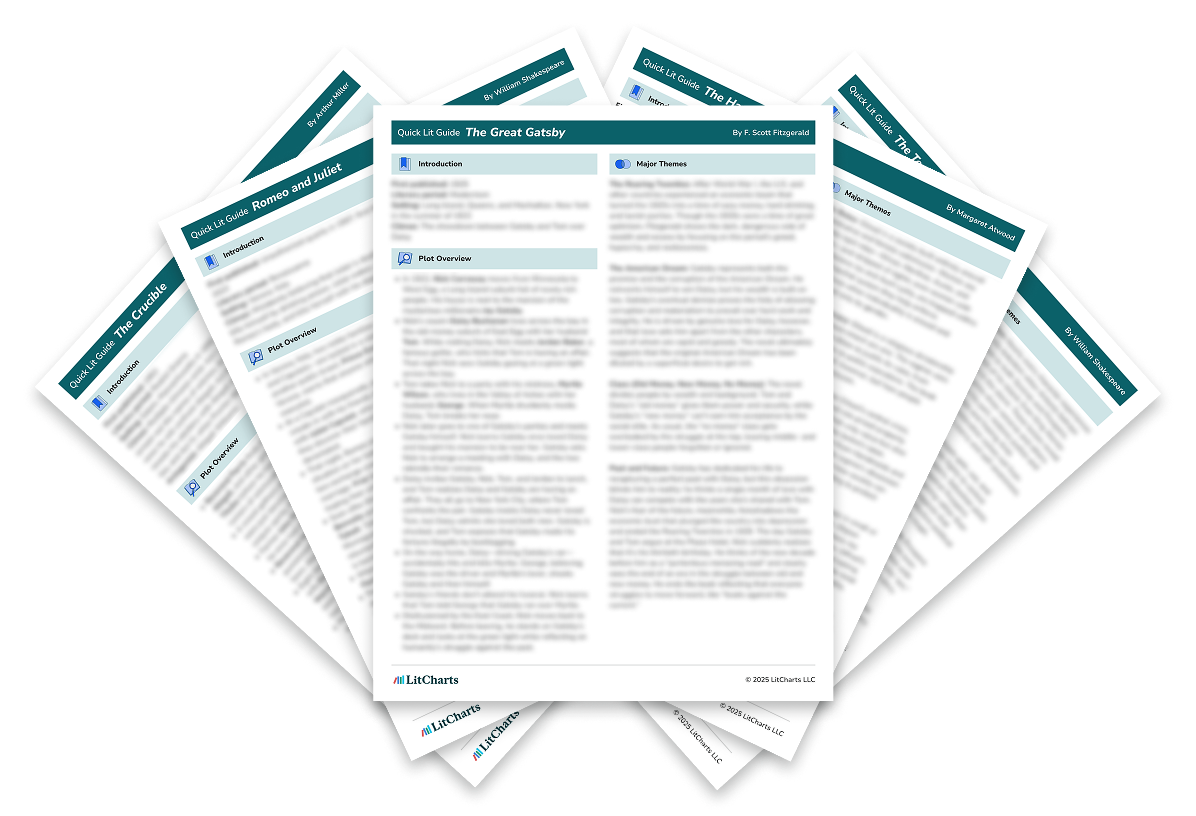
Literature Guide PDFs
LitCharts PDFs for every book you'll read this year.
Instant PDF downloads of all 2256 LitCharts literature guides and of every new one we publish. Try a free sample literature guide.
"Would not have made it through AP Literature without the printable PDFs. They're like having in-class notes for every discussion!"






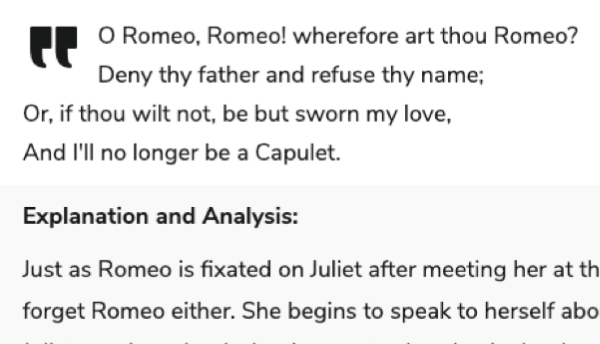
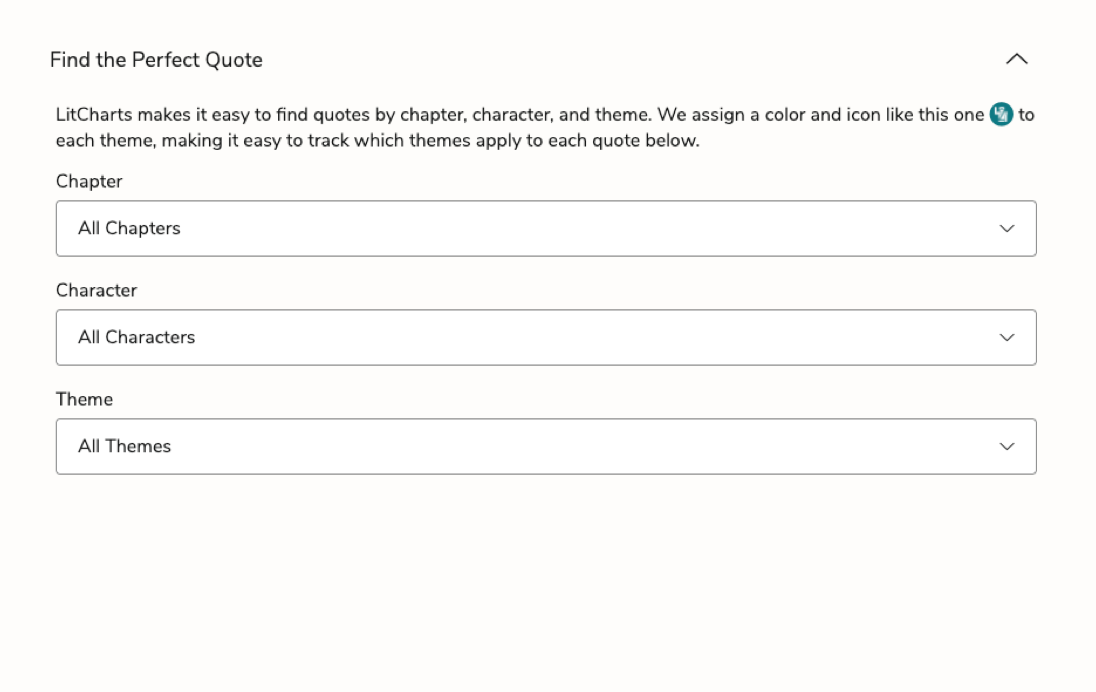
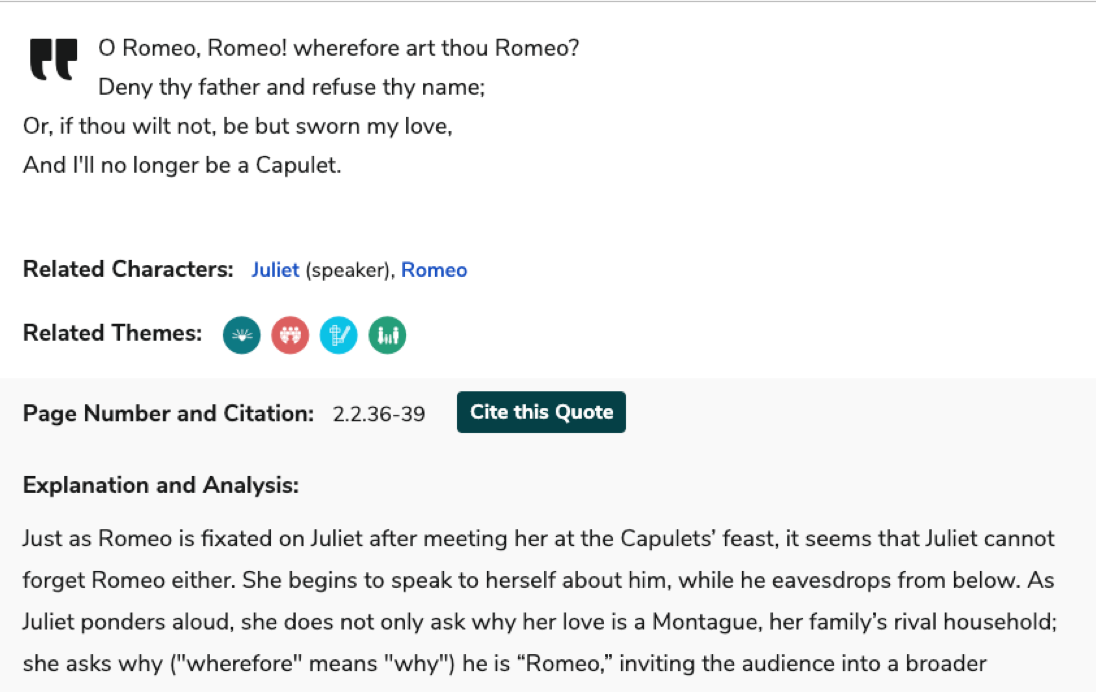
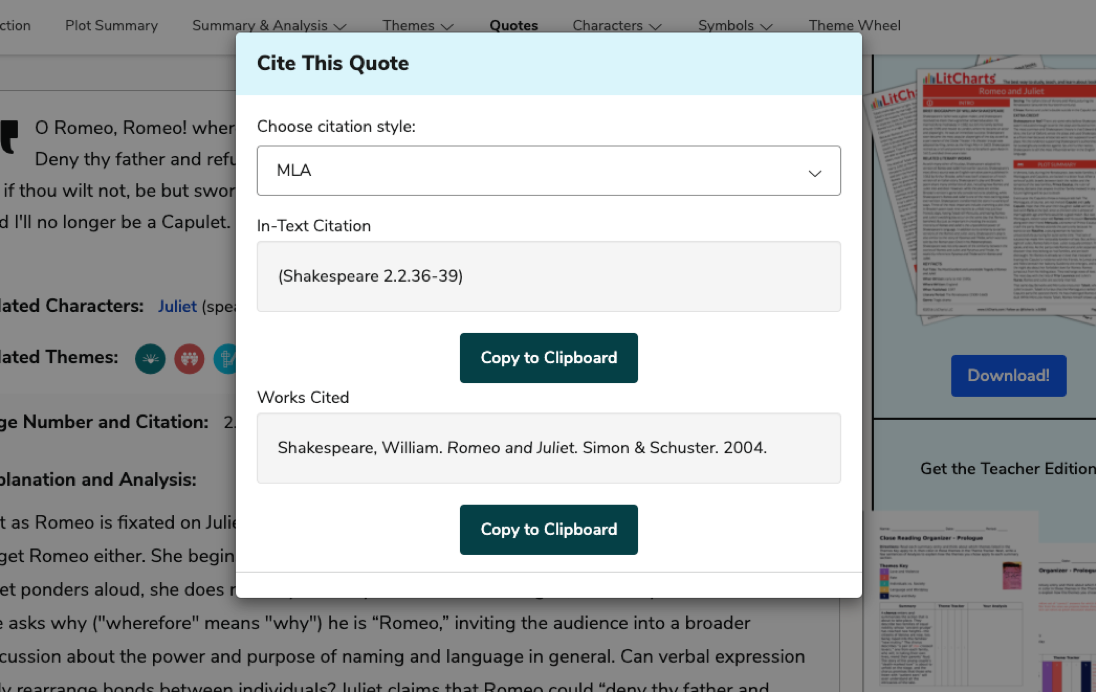
Quotes Explanations
Find the perfect quote. Understand it perfectly. Then rock the citation, too.
For all 50,308 quotes we cover.
For all 50,308 quotes we cover.


Teacher Editions
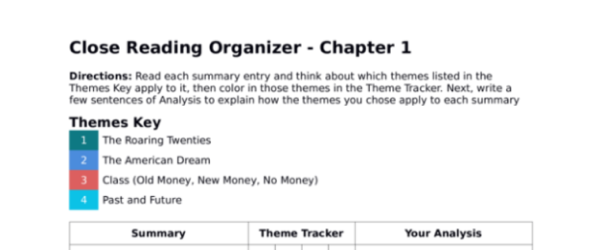
Close reading made easy for students.
Time saved for teachers.
For every book we cover.
Time saved for teachers.
For every book we cover.


Common Core-aligned


PDFs of modern translations of every one of Shakespeare's 37 plays, 154 sonnets, and 3 longer poems.

Literary Terms and Devices
Definitions and examples for every literary term and device you need to know.
Plus a quick-reference PDF with concise definitions of all 136 terms in one place.
Plus a quick-reference PDF with concise definitions of all 136 terms in one place.
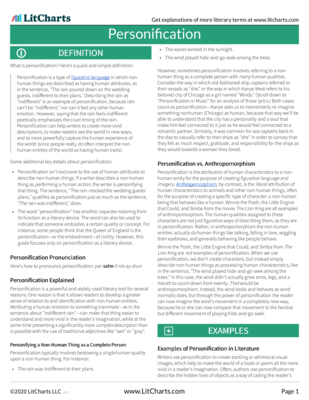
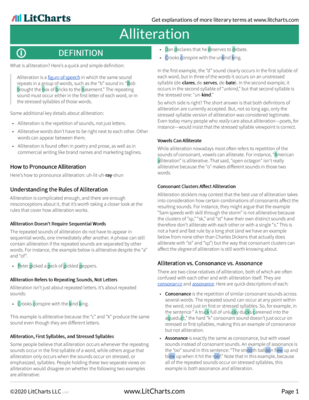
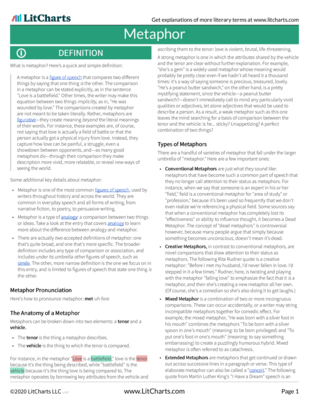
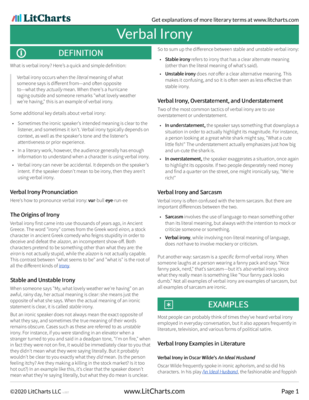
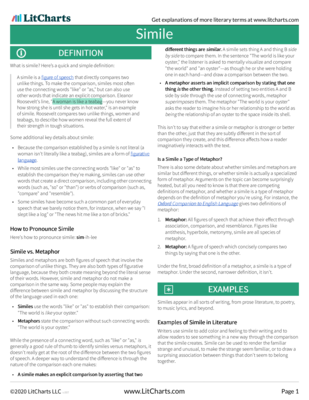
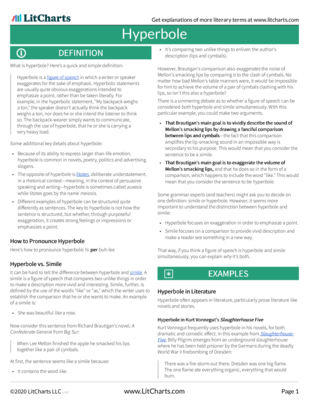
Try a free sample literary term PDF.


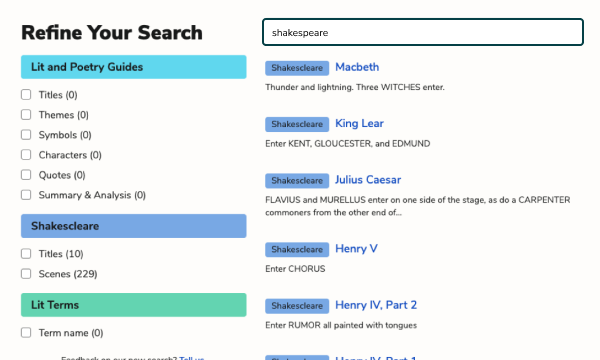
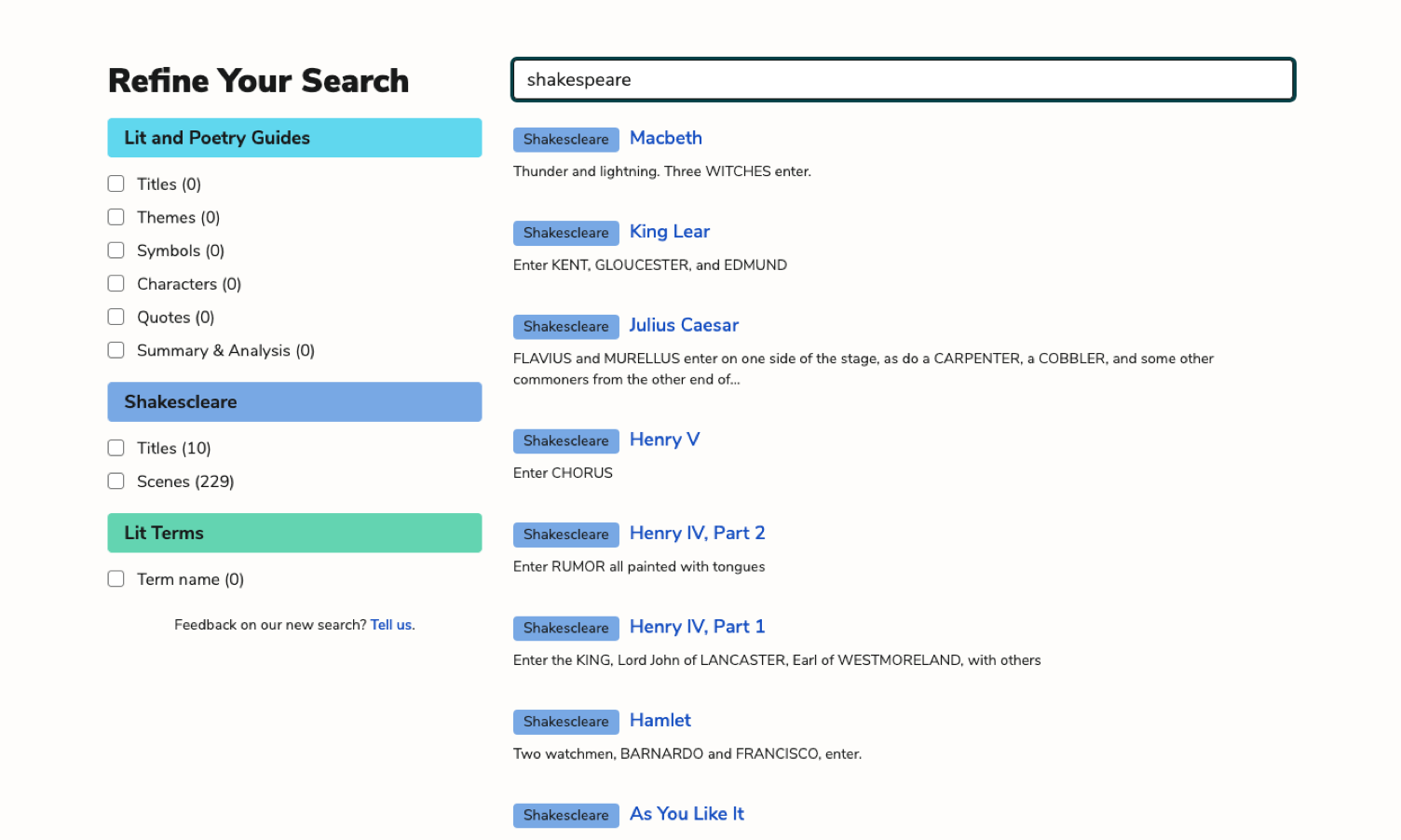
Advanced Search
Refine any search. Find related themes, quotes, symbols, characters, and more.

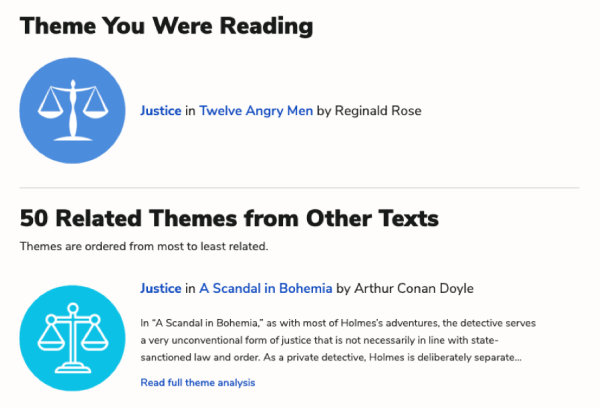
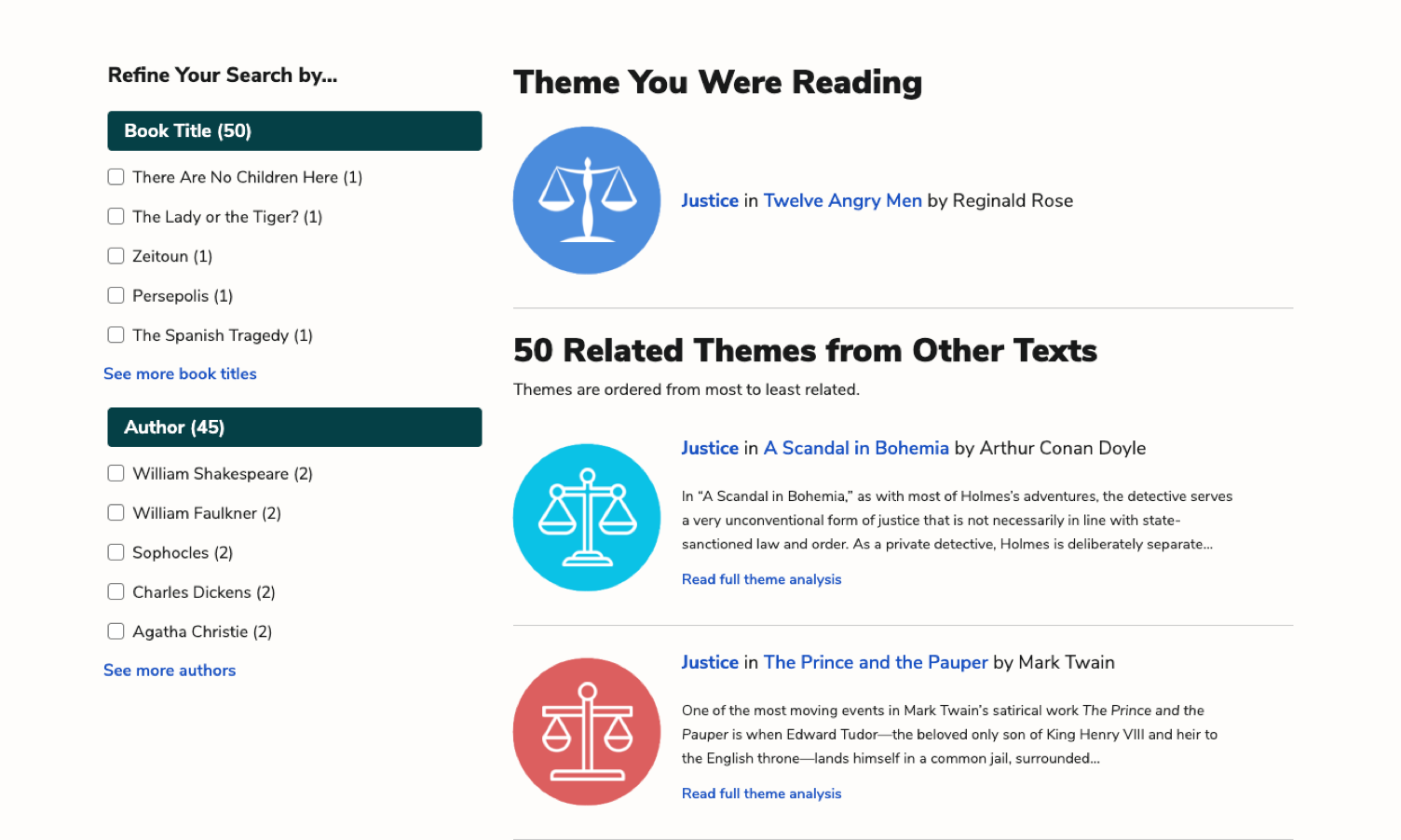
Related Themes
Comparing and contrasting texts? Find where any theme occurs across all of LitCharts in seconds.


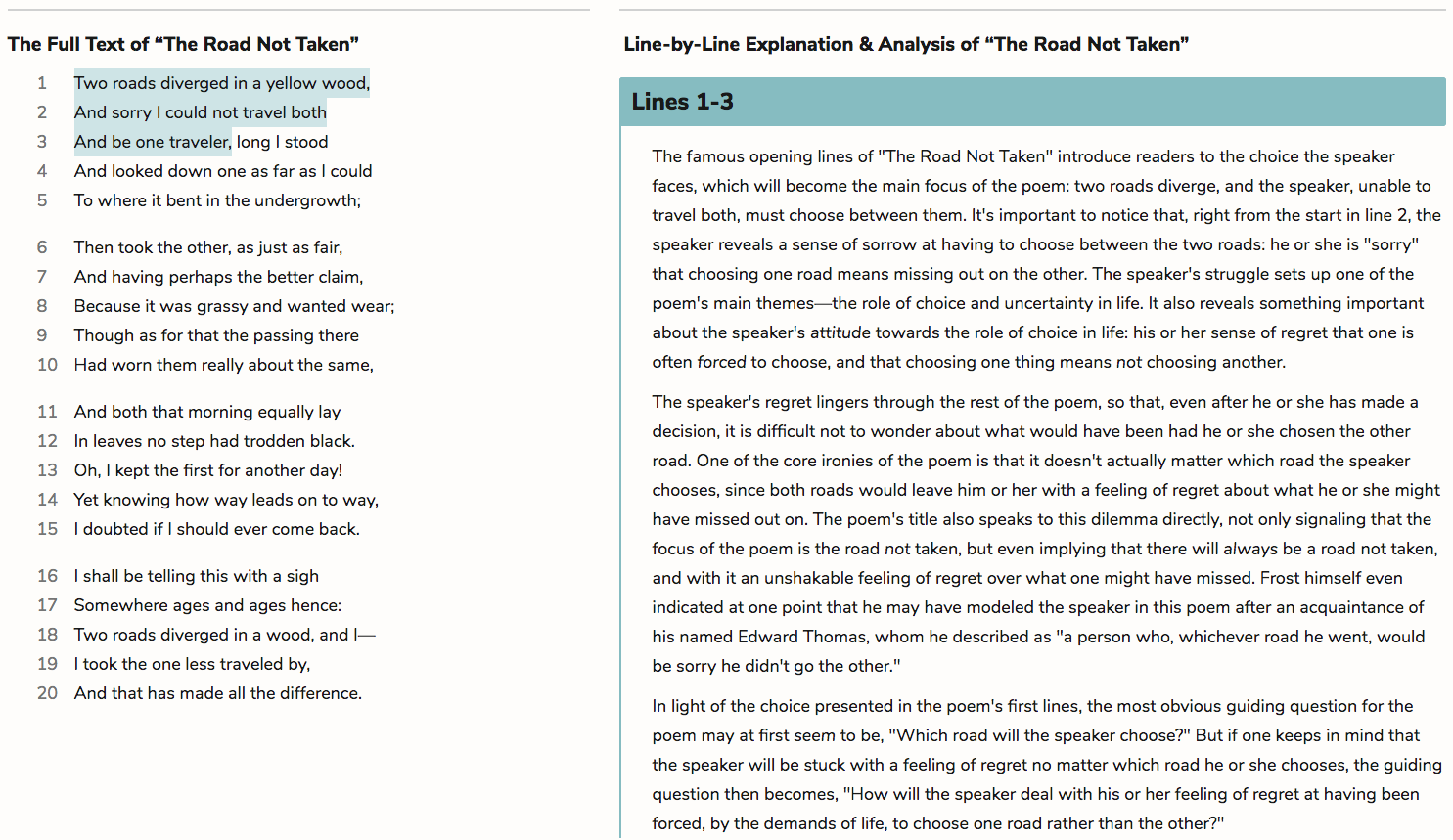
Poetry Guides
Line-by-line explanations and analysis of figurative language and poetic devices.
For every lyric poem we cover.
For every lyric poem we cover.