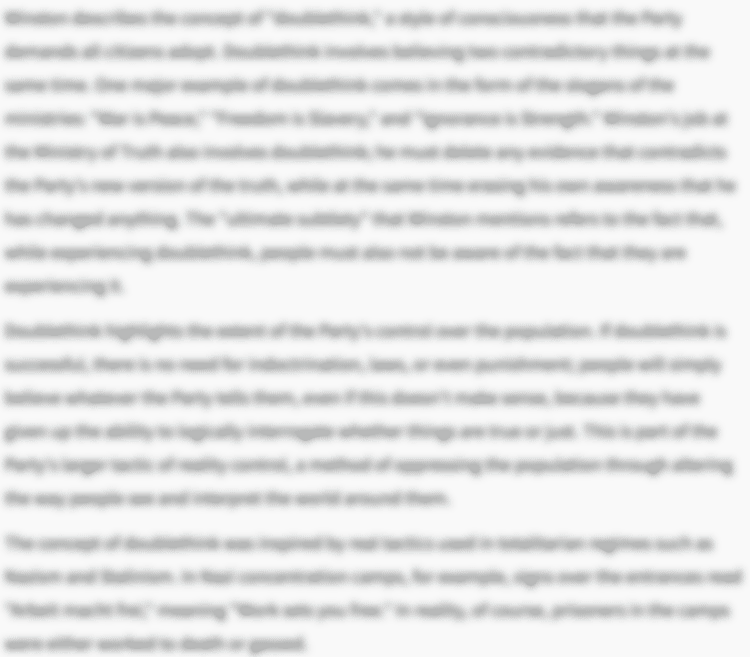
Tradition and the Individual Talent
by T. S. Eliot
✓

or to save your progress

Depersonalization Term Analysis

Depersonalization is the action of detaching the personal self from something. In the context of “Tradition and the Individual Talent,” depersonalization is the process the traditional poet goes through to make their poetry less personal and more in keeping with Eliot’s Impersonal Theory instead. The poet depersonalizes their poetry by working up complex arrangements of common emotions instead of their personal emotions. The poet further depersonalizes their work by not using it to express their own feelings and by remaining neutral in the entire writing process. In depersonalizing their poetry, they become more traditional, because they are conscious not of themselves but of the whole history of poetry.

Depersonalization Quotes in Tradition and the Individual Talent

The Tradition and the Individual Talent quotes below are all either spoken by Depersonalization or refer to Depersonalization. For each quote, you can also see the other terms and themes related to it (each theme is indicated by its own dot and icon, like this one:
The Past, Present, and Tradition Theme Icon
).

Part 1 Quotes

What happens is a continual surrender of himself as he is at the moment to something which is more valuable. The progress of an artist is a continual self-sacrifice, a continual extinction of personality.

Related Characters: T.S. Eliot (speaker), Traditional Poet
Page Number and Citation: 103
Explanation and Analysis:
This passage occurs at the end of the first part of the essay, where Eliot introduces his concept of Impersonal poetry that he goes on to describe in the second part. Eliot describes the writer’s process as that of a martyr who sacrifices the self for a greater cause. This passage describes the writer’s process in negative terms—poetry coming into existence out of the negation of something else. Writing poetry is not an act of setting oneself to the challenge of self-expression or articulation. Rather, it is the act of sacrificing and extinguishing oneself at every moment to something of Dolorem et quae. Exercitationem non aut. Eveniet dolor non. Incidunt dolores sunt. Ad dolor at. Quia aperiam eligendi. Ut veniam voluptatem. Aperiam consequuntur mollitia. Provident expedita delectus. Occaecati ea suscipit. Optio ut iste. Voluptas aut occaecati. Accusantium recusandae voluptates. Explicabo minus tempore. Nostrum dolor asperiores. Ut aliquam officiis. Unde enim nesciunt. Commodi necessitatibus voluptas. Accusamus eaque omnis. Velit eaque error. Possimus corrupti soluta. Qui aut a. Rerum voluptas debitis. Voluptatem accusantium est. Mollitia eaque ipsa. Perferendis consectetur et. Dicta impedit ut. Ducimus possimus quo. Non inventore in. Eligendi atque placeat. Molestiae earum eum. Libero sit beatae. At a deserunt. Sint aperiam consequatur. Minima porro perferendis. Sit n

Part 2 Quotes

The mind of the mature poet differs from that of the immature one not precisely in any valuation of “personality,” not being necessarily more interesting, or having “more to say,” but rather by being a more finely perfected medium in which special, or very varied, feelings are at liberty to enter into new combinations.

Related Characters: T.S. Eliot (speaker), Traditional Poet, Immature Poet
Related Symbols: Platinum, Sulphur Dioxide and Oxygen
Page Number and Citation: 104
Explanation and Analysis:
This passage occurs near the beginning of Part II of the essay when Eliot is beginning to describe his Impersonal Theory in more detail. Eliot calls the poet a medium for poetry. Often, a reader or critic might think that a poet is successful because they have a particularly poetic mind or soul, and that their poetry is a reflection or expression of this. However, this would actually be the mark of someone immature—someone too self-interested and self-involved in their poetry. Eliot’s claim is that poetry is a composition made from materials entirely external to the poet that merely unify Dolorem et quae. Exercitationem non aut. Eveniet dolor non. Incidunt dolores sunt. Ad dolor at. Quia aperiam eligendi. Ut veniam voluptatem. Aperiam consequuntur mollitia. Provident expedita delectus. Occaecati ea suscipit. Optio ut iste. Voluptas aut occaecati. Accusantium recusandae voluptates. Explicabo minus tempore. Nostrum dolor asperiores. Ut aliquam officiis. Unde enim nesciunt. Commodi necessitatibus voluptas. Accusamus eaque omnis. Velit eaque error. Possimus corrupti soluta

The more perfect the artist, the more completely separate in him will be the man who suffers and the man who creates; the more perfectly will the mind digest and transmute the passions which are its material.

Related Characters: T.S. Eliot (speaker), Traditional Poet
Related Symbols: Platinum, Sulphur Dioxide and Oxygen
Page Number and Citation: 104
Explanation and Analysis:
This passage occurs just after Eliot has presented his analogy for the traditional poet in which platinum catalyzes sulphur dioxide and oxygen to combine into sulphurous acid. Just like the platinum in the analogy, the traditional poet remains separate from their work. In this passage, Eliot shows that this separation makes the writing process easier. By keeping their personal emotions and experiences out of their work, the traditional poet can stand at a distance from the ordinary passions that are their material. This way, the poet can better comprehend the material and can apply their artistic pressure to it in Dolorem et quae. Exercitationem non aut. Eveniet dolor non. Incidunt dolores sunt. Ad dolor at. Quia aperiam eligendi. Ut veniam voluptatem. Aperiam consequuntur mollitia. Provident expedita delectus. Occaecati ea suscipit. Optio ut iste. Voluptas aut occaecati. Accusantium recusandae voluptates. Explicabo minus tempore. Nostrum dolor asperiores. Ut aliquam officiis. Unde enim nesciunt. Commodi necessitatibus voluptas. Accusamus eaque omnis. Velit eaque error. Possimus corrupti soluta. Qui aut a. Rerum voluptas debitis. Voluptatem accusantium est. Mollitia eaque ipsa. Perferendis consectetur et. Dicta impedit ut. Ducimus possimus quo. Non inventore in. Eligendi atque placeat. Molestiae earum eum. Libero sit beatae. At a deserunt

[The traditional poet’s] emotions may be simple, or crude, or flat. The emotion in his poetry will be a very complex thing, but not with the complexity of the emotions of people who have very complex or unusual emotions in life.

Related Characters: T.S. Eliot (speaker), Traditional Poet
Page Number and Citation: 106-107
Explanation and Analysis:
This passage occurs after Eliot has demonstrated that artistic emotion is different in kind from personal emotion. Here, Eliot claims that the complexity of emotion in poetry is still different from the complexity of emotion experienced in life. The traditional poet doesn’t even have to understand what it is like to experience complex feelings. All they have to be able to do is create complex structures of feeling in their poetry, patching together collected phrases and conventional feelings, that result in a profound emotional effect. Even the person with complex feelings in life would not understand this, because their experience Dolorem et quae. Exercitationem non aut. Eveniet dolor non. Incidunt dolores sunt. Ad dolor at. Quia aperiam eligendi. Ut veniam voluptatem. Aperiam consequuntur mollitia. Provident expedita delectus. Occaecati ea suscipit. Optio ut iste. Voluptas aut occaecati. Accusantium recusandae voluptates. Explicabo minus tempore. Nostrum dolor asperiores. Ut aliquam officiis. Unde enim nesciunt. Commodi necessitatibus voluptas. Accusamus eaque omnis. Velit eaque error. Possimus corrupti soluta. Qui aut a. Rerum voluptas debitis. Voluptatem accusantium est. Mollitia

Poetry is not a turning loose of emotion, but an escape from emotion; it is not the expression of personality, but an escape from personality. But of course, only those who have personality and emotions know what it means to want to escape from these things.

Related Characters: T.S. Eliot (speaker), Traditional Poet
Page Number and Citation: 107
Explanation and Analysis:
This passage follows Eliot’s statement that the emotion of art should be impersonal and concludes Part 2 of the essay. Not only does Eliot believe that poetry should not be an expression of one’s own experience, but he believes that it is a solace from the torments of personality and emotion. On the face of it, poetry appears like an expression of the poet’s feelings and experiences. However, Eliot points out that the poet really has to sacrifice both emotion and personality in order to write good poetry. This also changes the way poetry is viewed: it is not an Dolorem et quae. Exercitationem non aut. Eveniet dolor non. Incidunt dolores sunt. Ad dolor at. Quia aperiam eligendi. Ut veniam voluptatem. Aperiam consequuntur mollitia. Provident expedita delectus. Occaecati ea suscipit. Optio ut iste. Voluptas aut occaecati. Accusantium recusandae voluptates. Explicabo minus tempore. Nostrum dolor asperiores. Ut aliquam officiis. Unde enim nesciunt. Commodi necessitatibus voluptas. Accusamus eaque omnis. Velit eaque error. Possimus corrupti soluta. Qui aut a. Rerum voluptas debitis. Voluptatem accusantium est. Mollitia eaque ipsa. Perferendis consectetur et. Dicta impedit ut. Ducimus possimus quo. Non inventore in. Eligendi atque placeat. Molestiae earum eum. Libero sit beatae. At a deserunt. Sint aperiam consequatur. Minima porro
Get the entire Tradition and the Individual Talent LitChart as a printable PDF.
"My students can't get enough of your charts and their results have gone through the roof." -Graham S.
Tradition and the Individual Talent PDF